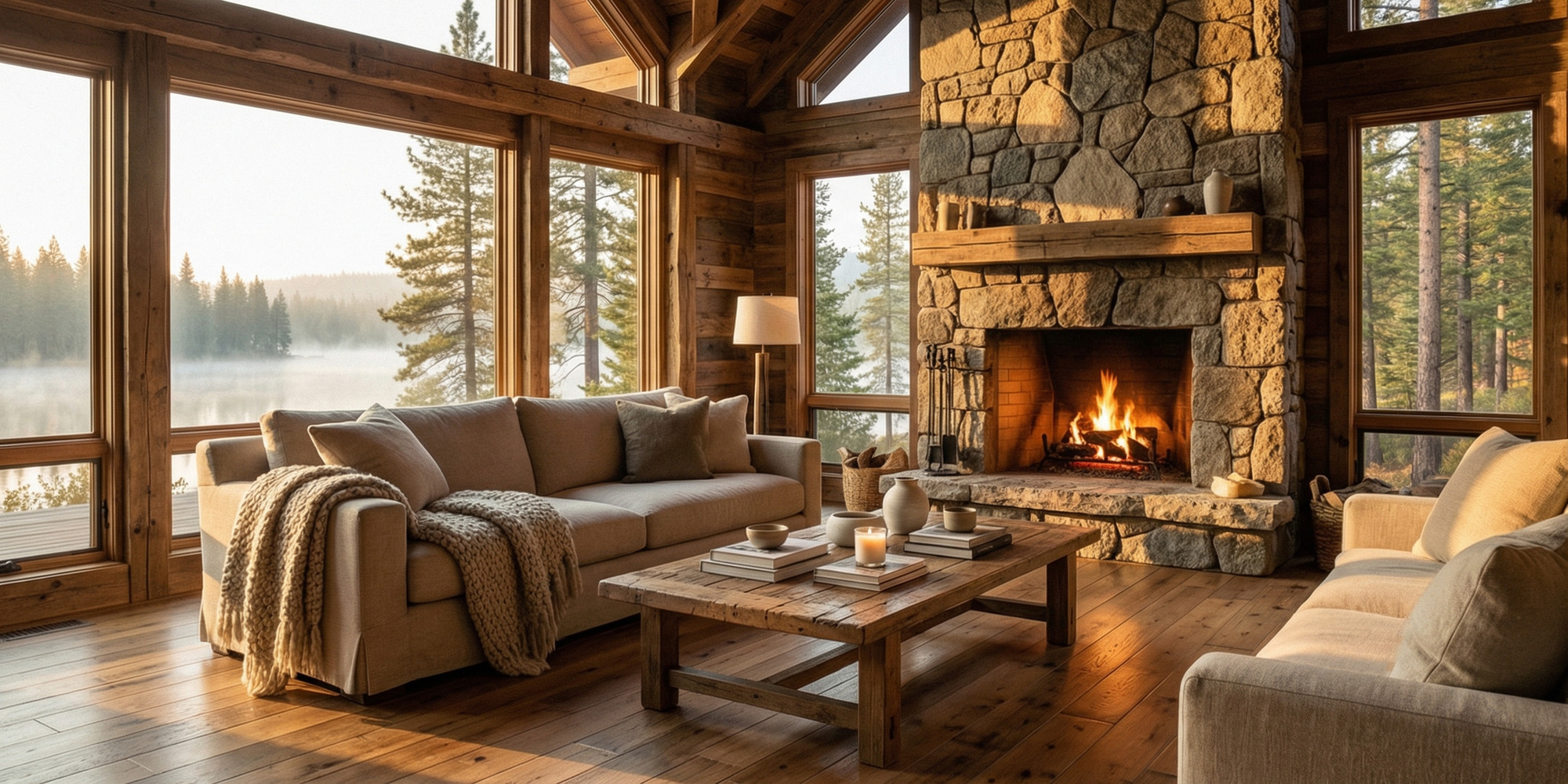
Second-home buyers are among the most demanding buyers in real estate — and for good reason. They’re making six-figure purchasing decisions about properties they can’t visit on a Tuesday afternoon. They’re buying a lifestyle, not just a home, and they’re doing most of their decision-making from a laptop screen hundreds of miles away. That makes listing photos the entire ballgame. Yet most vacation and resort market listings still show vacant rooms, dated rental furniture, or off-season exteriors that fail to communicate anything remotely aspirational.
AI virtual staging changes that equation completely. For agents specializing in second homes, lake houses, ski condos, coastal retreats, and short-term rental properties, it’s become one of the highest-ROI tools in the stack — and one of the most practical solutions to a genuinely complex logistics problem.
Why Second-Home Listings Are Uniquely Different
The second-home market is a substantial segment of U.S. real estate. In high-demand resort and vacation markets, vacation and investment properties routinely account for 20–40% of annual transaction volume. The buyers in this segment share a behavioral profile that distinguishes them sharply from primary residence purchasers.
Unlike buyers shopping for a family home they’ll drive by and walk through multiple times, second-home buyers:
- Shop in markets that may be a full day’s drive from where they live
- Rely almost entirely on listing photos and virtual tours to create a shortlist before traveling
- Make offers sight-unseen or after a single brief visit, particularly in competitive resort markets
- Have strong, emotionally charged expectations tied to lifestyle — the mountain morning, the lakeside evening, the beachfront weekend
- Are often buying into a specific vision that listing photos either confirm or fail to deliver
This means presentation quality isn’t a nice-to-have for vacation listings — it’s the conversion point. A listing that accurately shows a property’s bones but fails to communicate its lifestyle potential will lose to a competing listing that does, even if the underlying property is superior.
The Staging Challenges Specific to Vacation Properties
Traditional physical staging is already a significant investment for primary residences — typically ranging from $1,500 to $5,000 or more depending on property size, market, and staging duration. For vacation properties, the challenge isn’t just cost. It’s a stack of logistical obstacles that make traditional staging impractical in many cases.
Geographic isolation. Most vacation properties are in resort communities, lake regions, mountain towns, or coastal areas that are hours from the nearest professional staging company. Getting furniture delivered to a remote Smokies cabin or a ski property outside Tahoe involves trucking costs, scheduling challenges, and stager travel that most firms won’t quote at accessible rates.
Seasonal timing mismatches. Agents frequently need to list and photograph properties in off-peak months to capture the spring buying surge. A beach house in the Northeast needs to be photographed in March, not July. A mountain cabin looks best mid-summer but needs to attract ski buyers in October. Off-season photography produces exactly the conditions — gray light, dormant landscaping, cold empty interiors — that traditional staging cannot cost-effectively fix.
Owner-occupied complications. Many vacation homes oscillate between vacant periods and owner occupancy filled with personal items, seasonal gear, rental-ready furniture, and the accumulated clutter of a property that serves multiple purposes. Owners are often out of state when a listing needs to be prepared, and they’re understandably reluctant to store or remove items they use regularly.
Short-term rental overlap. Properties that operate as Airbnb or VRBO rentals often have practical but visually unappealing furnishings — pull-out sofas, mismatched bedding, bunk-bed configurations. These serve the rental guest experience well but communicate the wrong message entirely to a buyer considering a purchase at vacation home prices.
How AI Virtual Staging Solves the Problem
AI virtual staging sidesteps all of these complications. Rather than coordinating furniture delivery, stager travel, and property access across hundreds of miles, agents work from existing photos — empty rooms, off-season interiors, or occupied spaces — and transform them digitally.
Platforms like RealEstage.ai allow agents to upload raw property photos and receive fully staged rooms back within hours. The AI renders realistic furniture, lighting, textiles, and decor matched to the property type and target buyer profile. No trucks, no schedules, no owner coordination required.
For a vacant lakefront cottage, that means transforming bare hardwood floors and empty walls into a warm, inviting summer retreat — a gathered living room anchored by a stone fireplace, a reading corner positioned toward the lake view, a dining setup that makes the breakfast nook feel like a weekend morning in the mountains.
For a ski condo between rental periods, it means showing buyers what the space could look like with clean alpine furnishings instead of the rental-ready configuration currently photographed.
The cost comparison is stark:
- Traditional full staging for a remote vacation property: $3,000–$9,000+ (significantly higher in isolated resort markets)
- AI virtual staging per room: $15–$75 on most platforms
- Typical 4-room staging set (living room, two bedrooms, kitchen/dining area): $60–$300 total
- Delivery time: hours versus 3–7+ days minimum for traditional staging logistics
The cost difference is often 95% or more. For an agent handling even five vacation property listings per year, it represents thousands of dollars in savings that go directly to margin or can be absorbed as a listing value-add.
Styling for the Second-Home Buyer: Getting the Aesthetic Right
Not all virtual staging works equally well for vacation properties. The staging aesthetic needs to align with the lifestyle the buyer is purchasing — a mismatch between what the design suggests and what the property actually offers is immediately jarring to buyers who have strong visual expectations.
When briefing or selecting design direction for AI staging on vacation property types, consider the following:
Coastal and beach properties: Prioritize light, airy aesthetics with natural materials — rattan, linen, bleached wood. Neutral coastal palettes. Views should be unobstructed and emphasized as the room’s focal point. Avoid anything that reads as kitschy nautical.
Mountain and ski properties: Lean into warmth — wool textures, leather upholstery, dark wood, stone accents. Oversized seating grouped around a fireplace. Rich but not heavy. The buyer should feel the warmth immediately.
Lake houses and cabin retreats: Rustic-modern blends well here. Warm wood tones, comfortable gathered spaces, natural light emphasized. The indoor-outdoor connection — sliding doors, decks, water views — should drive the staging composition.
Desert and golf community homes: Clean desert modern or Spanish colonial aesthetics. Earthy palettes — terracotta, sand, warm neutrals. Open plans that emphasize bright, dry outdoor light.
AI virtual staging platforms have improved substantially in their ability to match regional aesthetics and property types. The best platforms offer style customization that lets agents specify the design direction rather than accepting a generic default output. For vacation properties where aesthetic match is particularly important, that customization capability should be a selection criterion.
The Dual-Use Staging Workflow for STR Properties
One of the most underrated advantages of AI virtual staging in the vacation property segment is the ability to create multiple staging sets from the same raw photography — one optimized for MLS and buyer marketing, another for short-term rental platforms.
This is impossible with traditional staging (you can’t physically restage a property twice for two different audiences), but it’s entirely practical with AI tools. The workflow is straightforward:
Step 1: Shoot the property raw. Clean, well-lit photos of every primary room with a wide-angle lens. Empty or minimally furnished is preferable — gives the AI maximum flexibility.
Step 2: Stage for buyer marketing first. Polished, design-forward staging for MLS photos. This is what appears in Zillow, Realtor.com, and listing presentations. Prioritize aspiration over practicality.
Step 3: Create a rental marketing set. Slightly more casual and comfortable staging for the Airbnb or VRBO profile. Emphasize the experience — the coffee setup by the window, the comfortable evening-ready living room, the well-appointed bedroom.
Step 4: Address the exterior. Exterior AI staging can fix seasonal limitations in the yard, driveway, and landscaping — adding summer greenery to a February shoot, addressing dormant garden beds, or removing the visual noise of off-season storage.
Step 5: Disclose appropriately. Per NAR ethics guidelines and most MLS policies, AI-staged photos must be identified as virtually staged. Confirm local MLS labeling requirements before listing.
Two complete marketing packages — buyer-facing and rental-facing — from a single photography session. That’s a genuinely different capability than traditional staging offers.
What the Data Says About Staging Impact
The evidence for staging’s effect on buyer behavior is well established. According to NAR’s 2025 Profile of Home Staging, 83% of buyers’ agents reported that staging made it easier for buyers to visualize the property as their future home. That number carries particular weight in the vacation context, where the visualization is tied not just to daily routines but to an aspirational lifestyle purchase.
The same NAR survey found that 60% of buyers’ agents said staging had a measurable effect on buyer decisions. In second-home markets where buyers are comparing ten to twenty listings and making fast, often remote decisions, professional-quality staged photos are a baseline competitive requirement — not an optional upgrade.
For agents in resort and vacation markets who aren’t staging every listing, this data represents a clear opportunity. Buyers are responding to staging. If your listings aren’t staged and competing listings are, the outcome is predictable.
Getting Started with AI Staging for Vacation Property Listings
If you haven’t built AI virtual staging into your second-home listing workflow yet, the entry point is straightforward:
Audit active listings first. Any vacant or under-staged vacation listing is an immediate candidate for AI staging updates. Updating listing photos mid-campaign with AI-staged replacements can re-engage buyers who viewed the original photos and moved on.
Build it into your listing cost structure. At $60–$300 for a complete room set, AI virtual staging is a standard line item, not a discretionary expense. Price it into every listing or absorb it as a value-add — either way, make it automatic.
Use before/after images in seller consultations. Vacation property sellers are often highly motivated but uncertain about staging value for remote properties. Visual before/after examples from comparable properties are among the most persuasive tools in a listing presentation.
Start with the living room and primary bedroom. These are the highest-engagement rooms for vacation buyers and deliver the greatest visual impact per image.
Platforms like RealEstage.ai are built for real estate agents who need high-quality, fast-turnaround AI staging without the cost or logistics overhead of traditional methods. For agents in second-home and resort markets — where listings are remote, buyers are distant, and presentation quality is the primary decision driver — it’s one of the most targeted investments in the listing toolkit.
The vacation property market rewards agents who invest in premium presentation. With AI virtual staging now accessible at a fraction of traditional staging costs, that investment pays for itself on the first listing.
Related Articles
- Curb Appeal Reimagined: How AI Exterior Virtual Staging Is Winning More Buyers at First Glance in 2026
- The Vacant Listing Playbook: How AI Virtual Staging Turns Empty Rooms Into Buyer Magnets
- AI Virtual Staging for Investment Properties: The Investor’s Complete Guide to Faster Sales and Higher Returns in 2026
- Virtual Staging vs. Traditional Home Staging: The Complete 2026 Cost and ROI Guide for Real Estate Agents
- AI Virtual Staging for Luxury Listings: The Premium Playbook for High-End Real Estate in 2026
- Virtually Staging Occupied Homes: How AI Solves the Lived-In Listing Challenge in 2026