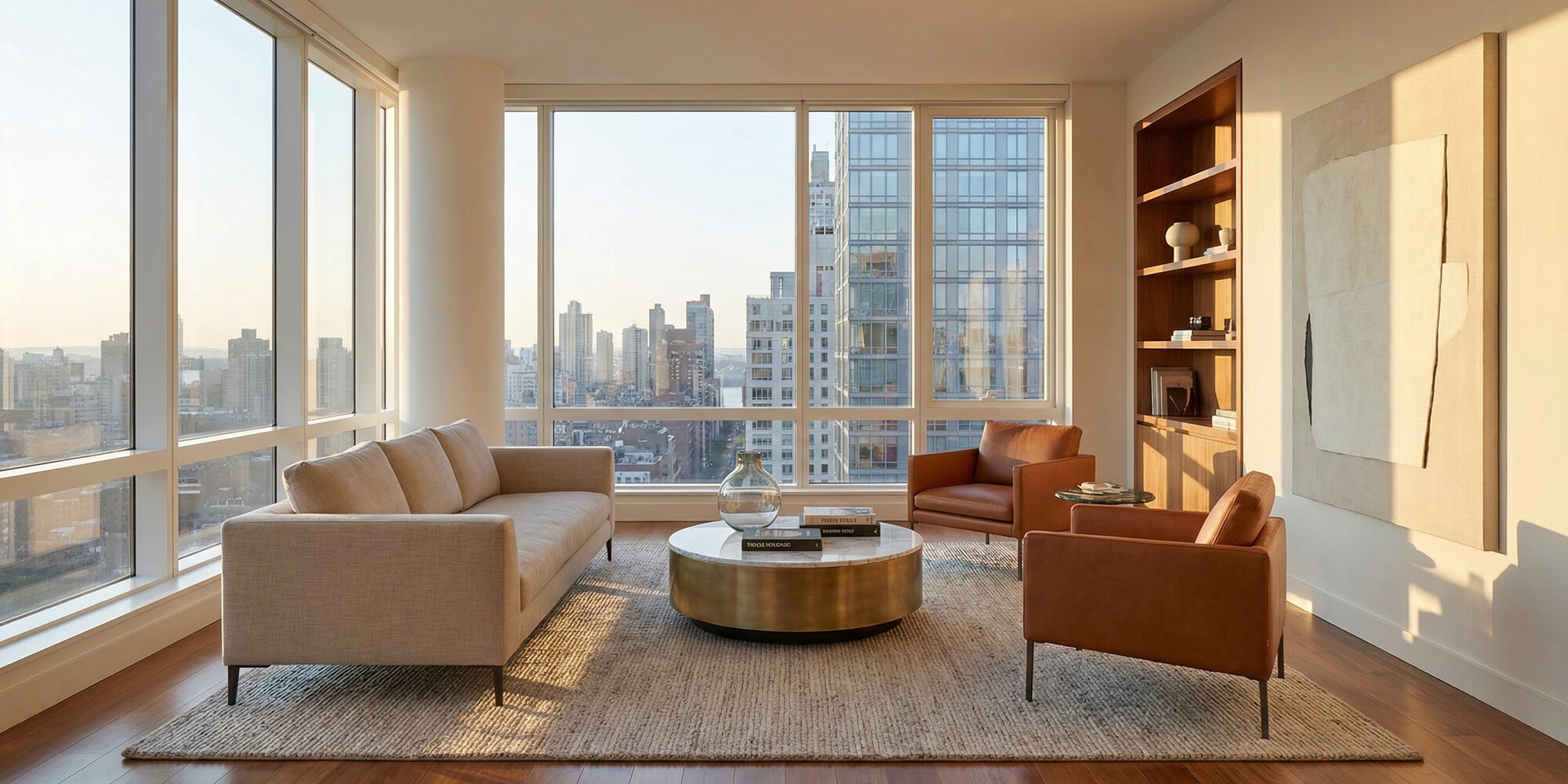
Traditional home staging averages $1,500 to $5,000 per listing — and 79% of sellers’ agents never use it. Meanwhile, 83% of buyers’ agents say staging directly helps buyers visualize the property as their future home. AI virtual staging closes that gap for $24 per photo, delivered in hours — not days. For agents who want to compete on listing quality without inflating seller costs, the math is hard to ignore.
The Staging Gap — Why Most Listings Go Unstaged
Home staging works. The data on this is not ambiguous. According to the NAR Profile of Home Staging (February 2025), 83% of buyers’ agents report that staging makes it easier for buyers to visualize a property as their future home. Another 60% say staging affects at least some buyers, and 26% say it affects most buyers. Staged listings spend less time on the market and generate more online views during the critical first two weeks of a listing going live.
And yet — only 21% of sellers’ agents stage all their listings. 10% stage only “difficult” properties. The majority of agents acknowledge that staging works, but they don’t do it. The reason is almost always the same: cost, logistics, and seller resistance.
Traditional home staging is operationally expensive. A stager needs to conduct a consultation, source furniture from a rental inventory, schedule delivery and setup, coordinate access, and then reverse the entire process at the end of the listing period. For a typical three-bedroom home, this process runs $1,800 to $5,000 in one-time fees — before any monthly furniture rental extensions if the listing sits. Sellers who are already nervous about commission costs push back hard when agents raise staging in the listing presentation.
Vacant properties feel the impact most acutely. An empty room with white walls and bare floors is one of the hardest things to sell online. Buyers browsing Zillow at 10 PM can’t feel the scale of the space, can’t imagine where the furniture goes, and can’t picture themselves living there. They scroll past. The listing loses the battle before a showing is ever scheduled.
AI virtual staging removes every logistical and financial barrier that has kept staging out of reach for the average listing.
What AI Virtual Staging Actually Is — And How It Works
AI virtual staging is not Photoshop by hand. Modern platforms use generative AI models trained on interior design data to place photorealistic furniture, rugs, artwork, and lighting into photos of empty rooms. The output is indistinguishable in quality from professional real estate photography with physical staging — because the technology has advanced to that point.
The workflow for agents is straightforward:
- Photograph the empty room using standard listing photography, or even a seller’s smartphone in adequate lighting
- Upload to an AI staging platform and select room type (living room, primary bedroom, dining room) and design style (modern, Scandinavian, farmhouse, transitional)
- Receive staged images within 2–48 hours depending on the platform and service tier
- Disclose to buyers — MLS systems and NAR’s Code of Ethics require disclosure that listing images are virtually staged; a simple caption handles this
- Deploy across all marketing channels — Zillow, Realtor.com, MLS, social media, email campaigns, and listing presentations
The key distinction from older virtual staging approaches is the generative AI layer. Earlier tools required manual Photoshop manipulation by design freelancers, which was slow, expensive, and inconsistent in quality. Today’s AI platforms — including purpose-built tools like RealEstage.ai — process an upload and return a professionally styled image through automated AI pipelines, compressing what once took days into hours.
The Numbers — A Cost Comparison That’s Hard to Argue With
The economics of AI virtual staging versus traditional staging are not close.
Traditional staging cost breakdown:
- Initial stager consultation and setup: $800–$2,000
- Furniture rental (first month): $500–$2,500 depending on home size and style
- Re-staging or extended rental if listing doesn’t sell: additional monthly fees
- Realistic total for a typical listing: $1,800–$5,000+
AI virtual staging per-image pricing (current 2026 market rates):
- Standard virtual staging: $24 per image
- 360° virtual staging for interactive tours: $32 per image
- Virtual renovation (updating floors, walls, or structural elements): $90–$140 per image
- Basic image enhancement and correction: $1.20 per image
For a typical listing, agents stage the living room, primary bedroom, and dining room — the three rooms NAR identifies as most commonly staged, cited by 91%, 83%, and 69% of agents respectively. That’s three images at $24 each: $72 total.
The ROI math is straightforward. The NAR Profile of Home Staging consistently shows staged homes sell for 1–5% more than comparable unstaged listings. On a $400,000 listing, a 1% premium equals $4,000 in additional sale price. Against a $72 virtual staging investment, that’s a return ratio that no other listing marketing expenditure can match.
Platforms like RealEstage.ai make per-image pricing accessible at scale, meaning agents running high listing volumes can build virtual staging into their standard listing package without taking a margin hit. At $72 per listing, staging stops being a concession for difficult properties and becomes a baseline service for every seller.
The AI Staging Landscape — Platforms Worth Knowing in 2026
The virtual staging market has matured considerably over the past two years. Agents evaluating platforms in 2026 have several credible options:
- VirtualStaging.com — Human-assisted AI workflow, $24/image standard, 24-hour turnaround, broad style library
- Styldod — AI-powered with manual review, $16–$25/image depending on volume tier, popular with high-volume teams
- BoxBrownie — Multi-service platform handling virtual staging, twilight conversion, decluttering, and object removal; $24+/image
- RealEstage.ai — AI-first virtual staging platform built specifically for real estate agents, with an integrated listing workflow that connects staging directly to listing preparation; purpose-built for agents managing multiple listings simultaneously
- REimagine Home — AI room redesign tool with a free tier and premium options for full virtual staging
Each platform has different turnaround times, style options, and output resolution. The differentiator for agents choosing between them is workflow integration. A platform that delivers staged images as standalone files is useful; a platform that integrates staging into the broader listing preparation process — connecting photos, descriptions, and marketing assets — is a multiplier on agent productivity.
The 46% of agents who now use AI-generated content for listings (up sharply from prior years, per the NAR 2025 REALTOR® Technology Survey) are increasingly gravitating toward platforms that handle more than one task. Staging is rarely the only thing an agent needs done before going live.
Beyond Empty Rooms — Advanced Use Cases Driving Adoption
The primary use case for AI virtual staging is vacant listings, but agents using the technology regularly have discovered high-value applications well beyond empty rooms:
Occupied listings with dated decor. Older furniture, dated paint colors, or cluttered spaces can be digitally cleared and replaced with modern staging. This is one of the most commercially valuable applications — sellers are often resistant to spending money on physical updates before listing, but a digitally updated photo set can dramatically improve online performance without requiring the seller to touch their home.
Style personalization. The same vacant room can be staged in multiple design styles — modern, Scandinavian, transitional, farmhouse — and targeted at different buyer demographics across different marketing channels. An urban millennial buyer scrolling Instagram sees a different version than a suburban family browsing Realtor.com.
Renovation visualization. Virtual renovation tools allow agents to show buyers what a kitchen remodel, bathroom update, or flooring change would look like before any construction begins. For properties that need work, this transforms a perceived negative into a selling point.
360° staging for Matterport tours. As interactive walkthroughs become standard on mid-range and luxury listings, 360° virtual staging extends the technology into immersive viewing experiences. Buyers touring a property virtually get the same visual impact as physical staging, without a single piece of furniture ever entering the home.
Exterior twilight conversion. Daytime exterior shots can be transformed into dramatic twilight photography — warm interior lighting, golden sky tones, landscaping enhancement — at a fraction of the cost of scheduling a dedicated twilight shoot.
Disclosure and Ethics — Getting It Right
NAR’s Code of Ethics and virtually all MLS systems require that virtually staged listing photos be disclosed as such. This is not a legal gray area — it is a clear obligation, and agents who use virtual staging images without disclosure face misrepresentation exposure.
The proper approach is simple and widely accepted:
- Add a caption to staged images: “Virtually Staged”
- Disclose in the listing remarks that photos include virtual staging
- Where possible, include both the staged and unstaged version of each image so buyers can see the actual condition of the space
Contrary to what some agents fear, disclosure does not hurt conversion. Buyers in 2026 are sophisticated — they understand that listing photography is aspirational, and they appreciate agents who show both the potential and the reality. The NAR 2025 Technology Survey found that 82% of clients respond positively or very positively to agents who integrate technology into their service delivery. Transparency about virtual staging is part of that positive response.
The agents who are getting this wrong are the ones using virtual staging without any disclosure. That’s the exposure point — not the technology itself.
How to Present AI Virtual Staging to Sellers
The listing presentation is where AI virtual staging converts from a tool into a competitive differentiator. Agents who present this capability effectively are winning listings from agents who still quote $2,000 staging fees — or who skip staging entirely.
The framing that resonates: “We can stage every room professionally for under $100, and buyers will see it from the moment we go live.”
That single sentence reframes the conversation. No furniture delivery. No scheduling. No seller out of pocket for thousands. No waiting a week for the stager to be available. Your listing is staged, professional, and live in 24 hours.
For the listing presentation itself:
- Show side-by-side examples of unstaged vs. AI-staged rooms — the visual impact is immediate
- Lead with the 83% buyer visualization statistic from NAR — it’s the credibility anchor
- Quantify the investment: “Three rooms staged professionally for $72”
- Emphasize that 95% of buyers start their search online — the photos are the first showing
AI staging tools built for agents, like those available at RealEstage.ai, are making it possible to include virtual staging as a standard deliverable in every listing package — not an upsell, not a concession for difficult properties, but a baseline professional service that differentiates your listings from the 79% that go to market without it.
The competitive math is simple: if your competitor across town is offering staged listing photos and you’re not, you’re losing sellers before the conversation starts. Virtual staging is no longer a premium service. It’s table stakes for the agents who understand where buyer attention actually goes.
The Bottom Line
AI virtual staging has crossed the threshold from novelty to necessity. The technology is proven, the pricing is accessible, the output quality is professional, and the ROI is demonstrable. Every factual barrier to adoption — cost, logistics, turnaround time, quality — has been resolved.
The only remaining barrier is awareness. The agents who understand this are staging every listing and winning on differentiation. The agents who don’t are quoting $2,000 staging fees to sellers who say no, then listing vacant homes with empty rooms and wondering why they’re not getting showing requests.
For a $24 investment per photo and 24 hours of lead time, there is no reason to send an unstaged listing to market in 2026.
Related Articles
- Virtual Staging vs. Traditional Staging: Cost, ROI, and What the Data Says
- NAR 2025 REALTOR® Technology Survey: What the AI Adoption Numbers Mean for Agents
- Virtual Staging Disclosure: Compliance Guide for Real Estate Agents
- The Psychology of Virtual Staging: Why Listing Photos Drive Buyer Decisions
- AI Video Tools for Real Estate Listings: What’s Working in 2026
- AI Floor Plan Tools for Real Estate Agents: A 2026 Buyer’s Guide