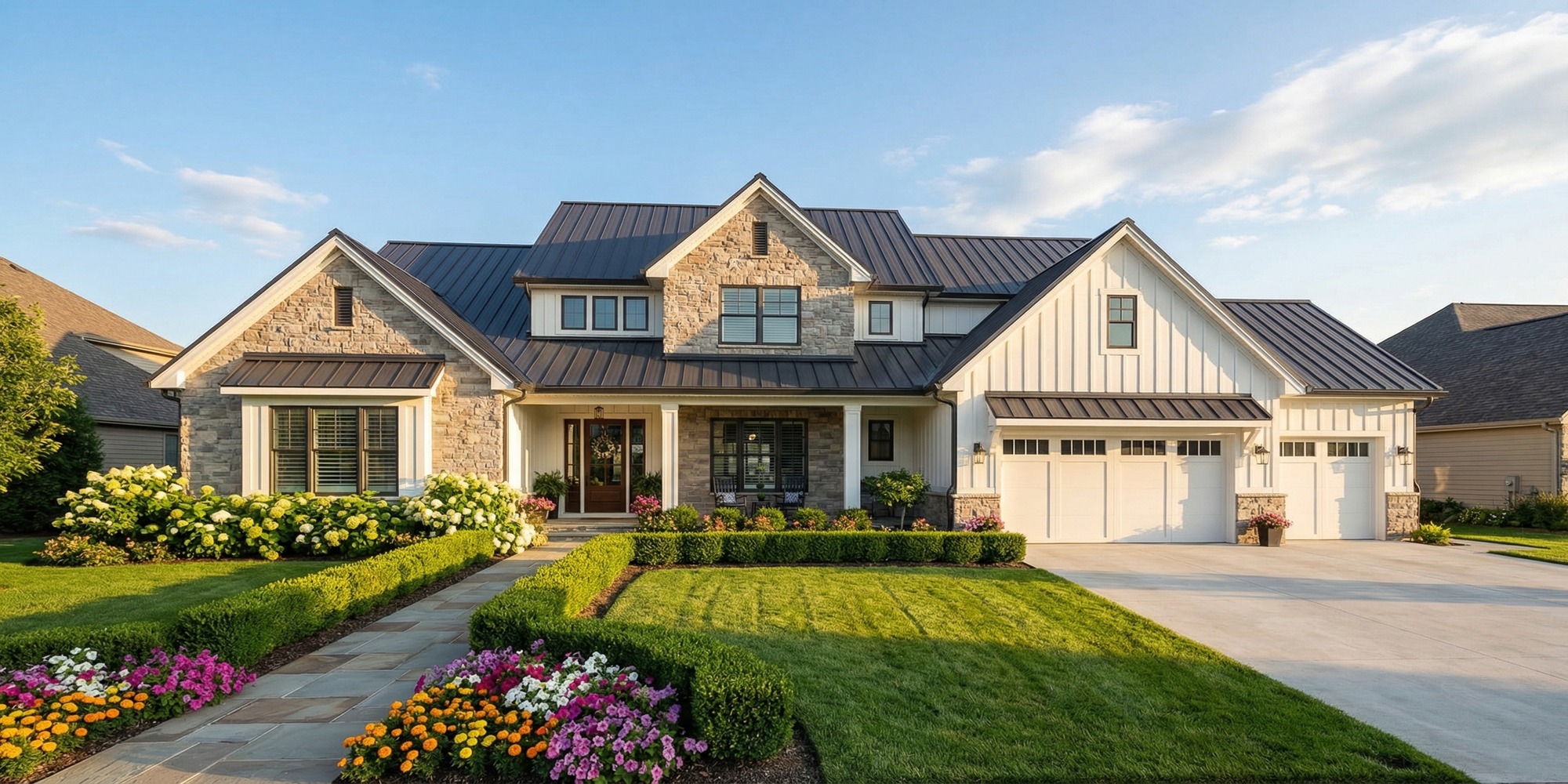
The exterior shot is the most consequential photo in any real estate listing — and most agents treat it like an afterthought. Buyers browsing Zillow, Realtor.com, or Redfin make a split-second judgment about whether a property is worth clicking on based almost entirely on that first exterior image. Dead grass in August. A storm-gray sky pulled from a January photo session. Overgrown hedges that hide the architecture entirely. These are deal-breakers that happen before a buyer ever reads the description or sees the kitchen. AI exterior virtual staging is changing how agents address this problem — not by postponing the photo shoot until conditions are ideal, but by transforming any exterior photo into a compelling, seasonally appropriate, buyer-ready image in hours.
Why the Exterior Photo Is the Highest-Stakes Asset in Your Listing
Interior photography has received the bulk of attention in the real estate AI staging conversation. But the exterior photo carries a disproportionate weight in buyer decision-making.
When buyers scroll through portal results, the thumbnail image determines whether they click at all. On most major platforms, that thumbnail defaults to the first photo in the listing — typically the exterior. According to the National Association of Realtors’ 2024 Profile of Home Buyers and Sellers, 96% of buyers used the internet in their home search, and the quality of listing photos is consistently rated among the most important factors in a buyer’s decision to request a showing.
A compelling exterior doesn’t just generate clicks — it sets the emotional frame for everything that follows. Buyers who arrive at a property with positive anticipation are more forgiving of minor interior flaws. Buyers who arrive skeptical — because the exterior photos looked tired, dark, or unkempt — come in looking for reasons not to buy.
The problem agents face is that exterior conditions are largely out of their control. Listings launch in winter when lawns are brown. Photo sessions happen on overcast days because that was the only day the photographer was available. Properties sit on sloped lots where landscaping is difficult. These are real constraints. AI exterior staging is how you work around them.
What AI Exterior Virtual Staging Can Actually Do
The capabilities of today’s AI staging platforms for exterior spaces go well beyond simple sky replacement — though sky replacement alone can meaningfully transform a photo.
Sky replacement and lighting correction is the most common exterior staging application. A flat, gray sky is swapped for a bright blue sky with natural clouds, or a warm golden-hour gradient that makes the facade glow. The AI accounts for the original lighting conditions, adjusting shadows and reflections so the result reads as natural.
Lawn and landscaping enhancement is where exterior staging becomes genuinely powerful. Brown or patchy grass is restored to a lush, green lawn. Overgrown shrubs are virtually trimmed. Bare flower beds are filled with seasonal plantings appropriate to the listing’s target market and price point. Dated or dead trees can be replaced, removed, or supplemented.
Facade improvements allow agents to present properties as their best possible version. Peeling paint, weathered siding, and dated finishes can be digitally refreshed without misrepresenting the property’s actual condition — as long as disclosures are handled correctly (more on that below). This is especially valuable for older homes where the bones are excellent but the exterior shows its age.
Seasonal adaptation is a capability that directly solves the timeline problem. A listing photographed in December can be shown with a late-spring exterior. A property that goes live in July can display fall foliage if that better serves the aesthetic or the target buyer. Agents can also generate multiple seasonal versions of the same exterior to use across different marketing channels or listing durations.
Driveway and hardscape enhancements clean up cracked concrete, add landscaping borders, or show a property with an improved entry path — small details that significantly affect perceived value.
Platforms like RealEstage.ai’s exterior staging tools apply these capabilities with AI-driven precision, letting agents upload an exterior photo and receive a professionally enhanced version without manually instructing a photo editor on every element.
The Disclosure Question: What Agents Need to Know
AI exterior staging is not the same as traditional photo editing, and agents need to handle it appropriately. The key principle is accurate representation: staging is acceptable when it shows what a property could reasonably look like under different conditions, not when it conceals material defects.
Replacing a gray sky with blue sky: acceptable. Digitally removing a power line that crosses the front of the property: that’s concealment of a material characteristic. Adding lush landscaping to a previously barren lawn: generally acceptable as a visualization. Digitally removing a neighbor’s fence that encroaches on the property line: not acceptable.
The Real Estate Staging Association recommends disclosure when any AI or digital enhancement has been applied to listing photos. Many MLSs now require disclosure labels for virtually staged images — check your local MLS rules and state regulations before publishing.
A practical approach: disclose AI enhancement in the listing description and photo captions, keep original photos available for in-person comparison, and use the AI-enhanced images consistently across marketing materials so buyers arrive with accurate expectations calibrated to the enhanced version.
The Workflow: How Agents Are Integrating Exterior Staging into Listing Prep
The most effective agents using AI exterior staging have built it directly into their listing launch checklist, treating it as a standard step rather than an optional enhancement.
Step 1: Photograph Under Any Conditions
Remove the pressure of scheduling photo sessions around weather. Shoot on the day that works for the photographer’s schedule and the seller’s availability. Gray sky, winter grass, bare trees — capture the architectural truth of the exterior and let the AI handle the rest.
Step 2: Select the Enhancement Profile
Most AI staging platforms offer preset enhancement profiles or allow custom direction. For a suburban family home, a bright spring day with a manicured lawn and blooming perennials is often the right call. For a luxury listing, a warmer golden-hour palette with mature landscaping and clean architectural lines may better match buyer expectations. For a condo or townhome, the enhancement might focus on sky replacement and entry presentation.
RealEstage.ai’s virtual staging platform allows agents to specify the look and feel of exterior enhancements without needing design expertise — the AI interprets the property type, price range, and existing architectural style to produce contextually appropriate results.
Step 3: Generate Multiple Versions
Most listings benefit from two or three exterior image variants: one optimized for the MLS primary photo (landscape orientation, clear facade emphasis), one optimized for social media (tighter crop, warmer tone), and optionally a twilight version for evening appeal. The cost difference between one version and three is minimal on modern AI platforms — generating multiple formats during a single session takes minutes.
Step 4: Human Review Before Publishing
AI-generated exterior enhancements need a human review pass before they hit the MLS. Check that shadow directions are consistent with the enhanced sky. Verify that tree and landscaping additions don’t obscure the architecture or create visual confusion. Look at the image at thumbnail size — that’s how most buyers will first see it.
Step 5: Disclose and Deploy
Add the appropriate disclosure to your MLS listing and publish across all channels. Use the best exterior variant as your primary MLS photo and social media hero image. Archive the originals.
What the Numbers Say About Exterior Presentation
The impact of exterior presentation on listing performance is well-documented. According to the NAR 2023 Home Staging Report, staging consistently correlates with faster sales and stronger offers — and while that report focuses primarily on interiors, exterior presentation follows the same principle of first-impression psychology.
Data from professional real estate photography providers consistently shows that listings with enhanced exterior photos generate more online clicks, longer portal engagement sessions, and higher showing-request rates than listings with flat or low-quality exterior images. The specific impact varies by market and price point, but the directional finding is consistent: better exterior photos drive better listing performance.
The cost structure makes AI exterior staging one of the highest-ROI tools available. Traditional landscaping and exterior staging — physically planting flowers, reseeding a lawn, hiring a pressure washing crew — can run $500 to $2,000 or more before a single photo is taken. AI exterior staging typically costs a fraction of that, with most platforms charging per image or on a subscription basis that makes per-listing cost negligible.
For agents who use an integrated AI virtual staging platform across both interior and exterior photos — tools purpose-built for real estate listing presentation — the per-listing spend on visual marketing decreases significantly compared to traditional staging and physical prep, while the output quality buyers experience online can exceed what’s possible with physical staging alone.
Market Segmentation: Where Exterior Staging Matters Most
Not every listing has the same exterior staging opportunity. Here’s how to prioritize by property type.
Vacant single-family homes have the most to gain from exterior staging. No occupied landscaping to work around, and the exterior often suffers from neglect during the vacancy period. AI can restore the curb appeal that the property had at its best.
Properties in seasonal markets — ski towns, beach communities, mountain regions — benefit from seasonal adaptation. Showing a lake house with summer foliage when it’s listed in November, or showing a ski chalet surrounded by dusting snow when it’s listed in August, helps buyers connect emotionally with the property’s peak experience.
Distressed or dated exteriors — foreclosures, estate sales, investor flips that haven’t yet been renovated — can be presented with “potential realized” staging that helps buyers see past cosmetic issues to the underlying property value.
Luxury listings where the photography budget justifies comprehensive enhancement across every asset type, including multiple exterior variants for different channels.
New construction and pre-sales, where the physical exterior may not yet exist, or where landscaping is still bare. AI exterior staging fills the visual gap between construction-ready and move-in-ready presentation.
Choosing a Platform That Handles Exterior Staging Well
Not every AI staging platform handles exterior images with the same quality. Interior staging is the core use case for most tools, and exterior capabilities — particularly realistic landscaping generation, accurate shadow modeling, and sky replacement that doesn’t look like a stock photo filter — vary significantly.
When evaluating platforms, test the following scenarios with your own exterior photos: a gray sky replacement, a lawn restoration on dead grass, and a seasonal enhancement. The quality of these outputs will tell you more than any marketing comparison.
RealEstage.ai has built its staging engine to handle both interior and exterior enhancement within a single workflow, which matters for agents who want a unified tool rather than managing separate platforms for different photo types. The ability to process an entire listing’s photo set — living room, kitchen, primary bedroom, and exterior — in one session significantly reduces the administrative friction of AI staging adoption.
For agents who haven’t yet tested exterior staging capabilities, the fastest path to understanding what’s possible is trying it on a current listing. Most AI-powered property presentation platforms offer credits or trial access — the exterior enhancement test alone typically demonstrates value within minutes.
The Agents Who Win on Exterior Are Already Using AI
The listing market in 2026 is an attention economy. Every property competes not just with similar listings in the same neighborhood, but with the entire scroll feed of a buyer sitting on their phone during a lunch break. The exterior photo either earns the click or loses it — in under two seconds.
Agents who have integrated AI exterior staging into their standard listing workflow have effectively removed one of the biggest variables in listing performance: weather and seasonal timing. That advantage compounds over a career. Every listing launches with its best possible exterior presentation, regardless of when it photographs or what season it falls in.
The tools to do this professionally, at scale, and at a price point that makes economic sense on every listing are available now. The question for agents isn’t whether AI exterior staging is worth it. It’s whether they can afford not to use it while competitors already are.
Related Articles
- Vacant Listing AI Virtual Staging: A Complete Guide for Agents
- Buyer Psychology and Virtual Staging: What the Photos Tell Your Brain
- AI Virtual Staging vs. Traditional Staging: The 2026 Cost and ROI Guide
- How AI Listing Optimization Converts Browsers Into Buyers in 2026
- AI Virtual Staging Styles Guide: Matching Design Aesthetics to Your Market
- The Property Presentation Scorecard: AI Staging Listing Checklist for 2026