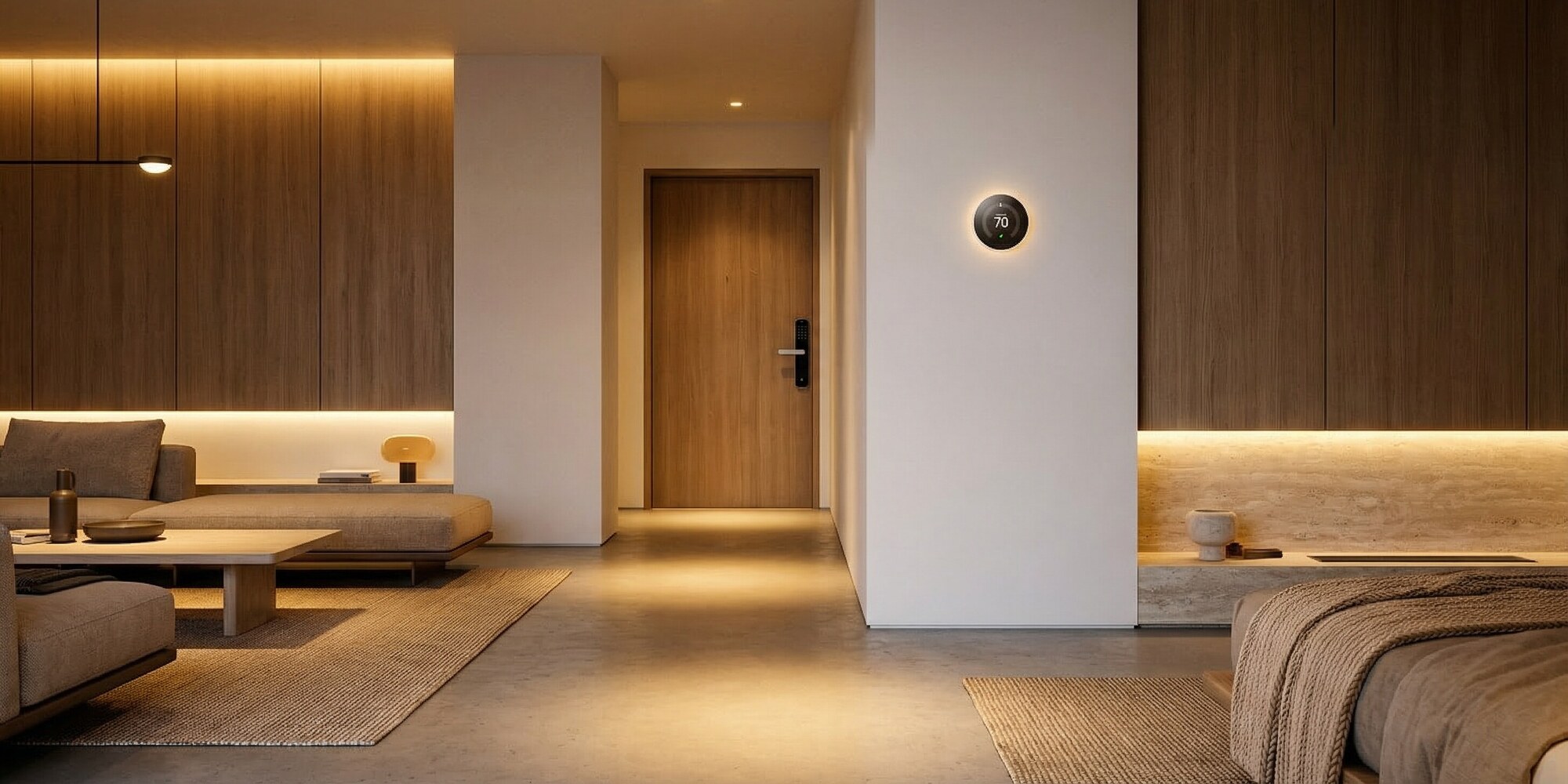
Smart home is no longer a differentiator — it’s a baseline expectation. CES 2026 made that unmistakable: 4,500+ exhibitors, and a disproportionate share of the real estate-relevant innovations were laser-focused on removing friction, lowering costs, and solving real problems for homeowners. The shift away from gadget novelty toward reliability, design, and platform interoperability is now complete. And yet most real estate agents still treat smart home features as an afterthought — buried near the bottom of a listing description between “freshly painted” and “lots of natural light.”
That’s an expensive gap. According to RubyHome’s 2026 smart home statistics report, 78% of homebuyers say they’d pay more for a smart home — and Today’s Homeowner data shows smart devices can increase resale value by up to 5%. The agents winning on both sides of the transaction in 2026 are the ones who know which features move the needle, how to present them in listings, and how to use them as a conversion tool.
The Market Is Bigger Than You Think
Parks Associates reports that 45% of internet-connected U.S. households have at least one smart home device — and 18% have six or more. Translated into homes: 77.05 million U.S. residences are actively using smart home technology, representing roughly 51% of all U.S. homes.
The market dollars back this up. The U.S. smart home market hit $33.26 billion in 2025, is projected to reach $54.53 billion in 2026, and will approach $99.40 billion by 2032 — a 16.9% CAGR. Globally, Precedence Research puts the 2024 market at $127.67 billion on a path to $1.4 trillion by 2034, with North America holding a 35.62% share.
The signal is clear: smart home features are going mainstream, not niche. For agents, this means buyers are arriving at every showing with baseline expectations — and a listing that doesn’t acknowledge or leverage smart home assets is leaving money on the table.
What CES 2026 Revealed About Where This Is All Going
The annual Consumer Electronics Show has become required reading for real estate professionals, and CES 2026 (January 6–9, Las Vegas) delivered six clear signals agents should internalize.
Friction removal is the new feature. The Matter protocol — a universal standard that lets devices work seamlessly across Apple HomeKit, Google Home, and Amazon Alexa — is now baked into mainstream products from Govee, Kwikset, Lockly, and others. Buyers who previously bounced off “you need a hub” are now legitimate smart home adopters. The “does it work with my phone?” question now has a clean answer: yes.
Smart locks are operational, not just aesthetic. The Kwikset Aura Reach brought Matter support and SmartKey rekeying to a mainstream design — ideal for managing access between occupants. Lockly’s Affirm series operates via NFC tap without internet dependency, which is critical for new construction, short-term rentals, and self-guided tours. The agent implication: smart locks now facilitate smoother showings, easier property access management, and cleaner handoffs at closing.
Energy resilience is becoming a headline selling feature. The Anker Solix E10 brought whole-home power backup to a $4,299 entry point — dramatically undercutting the $7,000+ starting price of Tesla Powerwall and EcoFlow competitors. In outage-prone markets (California, Texas, Southeast), and for the growing segment of work-from-home buyers, backup power is shifting from a luxury feature to an objection handler: “Never lose power during a storm” is now a concrete listing benefit with a price tag buyers can evaluate.
Robotic outdoor and indoor maintenance = show-ready homes. The Mammotion LUBA 3 robotic mower with AWD and LiDAR handles up to 1.75 acres autonomously, while next-gen robot vacuums from Roborock, Narwal, and Dreame handle multi-surface interior maintenance. Sellers with these systems can keep properties show-ready between appointments without daily manual effort.
AI-powered sensors that work invisibly. Lutron humidity sensors now auto-trigger bathroom fans before moisture builds up — reducing inspection risk. Smart shades auto-adjust throughout the day based on sunlight. AI lighting (Govee, Lutron) shifts color temperature with natural light cycles. These “background features” represent a powerful showing narrative: buyers don’t have to do anything differently to benefit.
Samsung’s 85-inch glasses-free 3D Spatial Signage made its debut at CES 2026, with direct implications for high-end listing presentations and commercial real estate showrooms — a preview of what luxury presentation tech looks like in 2027.
The ROI Breakdown: Which Features Actually Move the Needle
Not all smart home features are created equal. Armstrong Field’s 2026 property value analysis and data from the CE Shop and Today’s Homeowner reveal a clear hierarchy:
| Feature | ROI Range | Why It Works |
|---|---|---|
| Video doorbells | 85–95% | Universal appeal, low cost, security + convenience |
| Smart thermostats | 80–90% | Pays for itself in ~2 years; buyers can see the savings data |
| Smart security systems | 75–100% | Fundamental need; remote monitoring is expected |
| Smart lighting systems | 60–75% | Multi-platform integration, staging flexibility, energy savings |
| Smart locks | 50–65% | Tech-forward buyers love them; traditional buyers warming up |
| Smart garage openers | 45–60% | Convenience benefit; not a decision driver alone |
| Whole-home automation hubs | 40–70% | Varies by market; luxury standard; premium investment elsewhere |
The highest-ROI smart features share three traits: they solve a universal problem (security, energy cost, convenience), they produce visible data (energy bills, camera footage, thermostat history), and they’re platform-agnostic. If a feature requires buyers to adopt a new ecosystem, its perceived value drops.
The Listing Gap: What Most Agents Are Missing
Most agents aren’t systematically leveraging smart home assets in their listings — and it shows. CMG Financial’s 2026 buyer analysis confirms buyers are actively evaluating smart features as part of their purchase decision, but encounter listings that either ignore them entirely or bury them in vague language.
In listing descriptions: Specificity converts. “Smart thermostat” tells buyers nothing. “Nest Learning Thermostat — works with Alexa, Google Home, and Apple HomeKit; prior owner averaged $47/month in utility savings” is a decision driver. Include brand, model, platform compatibility, and data where available. Call out Matter-compatible devices as “future-proof” — buyers understand they won’t face compatibility headaches with future purchases.
In listing photography: Smart home features are invisible in standard photos. Supplement with intentional shots of control panels, thermostat dashboards, exterior camera placements, and smart lock keypads. Better yet, use AI-generated staging that shows the home activated — ambient lighting at its warmest, automated shades at their ideal midday position — rather than photographed under whatever conditions the day offered. AI virtual staging platforms like RealEstage.ai can depict a smart home’s ambient features in their best light, creating the “smart home lifestyle” effect without relying on a photographer to perfectly time the shot.
In buyer consultations: Add “smart home features” to your standard preference questionnaire. It often ranks alongside bedroom count in buyer priority but rarely gets asked about directly. For buyers new to smart home technology, explain what they’ll be inheriting: which features are hardwired (and convey with the home), which are portable (and likely leave with the seller), and how to transfer device ownership and credentials at closing.
In negotiations: Smart home systems that are built-in — thermostats, wired security cameras, hardwired locks — typically convey with the property. Portable or personal devices — smart speakers, plug-in lights, portable sensors — usually don’t. Clarifying this upfront prevents closing-day conflicts and gives sellers a concrete chip to play in negotiations if needed.
The Data Privacy Angle Agents Are Ignoring
Smart home devices collect substantial personal data: camera footage, microphone input, occupancy patterns, sleep behavior, and in some cases biometric identifiers. NYU Tandon School of Engineering research has identified significant privacy and security vulnerabilities across consumer IoT devices — vulnerabilities that carry real liability implications for real estate transactions.
Agents who proactively guide clients through smart home handoffs become trusted advisors in a space where most competitors stay silent. Practical protocol:
- For sellers: Recommend factory resetting all smart devices — cameras, thermostats, hubs, locks — before transfer. Prior access should not follow a property to a new owner.
- For buyers: Change all access codes, credentials, and hub logins on day one. Don’t assume the prior owner closed their accounts.
- In contracts: Consider including language: “Seller shall factory reset all smart home devices prior to closing.” This protects both parties and gives buyers clean access from day one.
Positioning Yourself as the Smart Home Expert
Agents who build smart home expertise into their practice create a durable competitive advantage. The category is large enough to be meaningful, complex enough that most buyers and sellers need guidance, and specific enough to establish a credible niche.
Content strategy: A “What CES 2026 Means for Your Home’s Value” piece is shareable, current, and positions you as a tech-forward advisor. Post one smart home insight per month — product releases, ROI data, seasonal tips (energy backup before summer grid stress, smart locks before listing season) — and you’ll build an audience that associates you with competence on this topic.
Listing differentiation: Build a “smart home snapshot” checklist for every listing that captures all devices, brands, apps, and platform compatibilities. Pair this with a one-page Smart Home Feature Sheet as a listing flyer supplement. Buyers who receive this level of documentation are better informed, more confident, and less likely to back out over uncertainty.
The full-service listing pitch: Agents who combine smart home documentation with AI-powered listing presentation tools — including AI-enhanced photography from platforms like RealEstage.ai’s virtual staging suite — can pitch a comprehensive, tech-forward listing package that justifies the premium commission conversation. The visual and the informational working together is more persuasive than either alone.
Partner strategy: Local smart home installers and integrators want real estate referrals. You want to offer buyers a reliable post-close setup service and a pre-listing smart home audit for sellers. That’s a natural co-marketing relationship that costs nothing and adds value on both sides.
The Actionable Agent Checklist
At every listing appointment:
- Document all smart home devices by brand, model, and connected platform
- Identify what’s hardwired/built-in vs. portable — clarify what conveys
- Request thermostat energy usage history for listing materials
- Photograph control panels, app dashboards, and exterior cameras with intent
- Recommend factory resetting all devices before transfer
At every buyer consultation:
- Add smart home features to your preference questionnaire
- Explain Matter compatibility and what it means for future device purchases
- Budget time post-close to walk buyers through device ownership transfers and credential changes
In your marketing:
- Lead listing descriptions with top smart features — security system, thermostat, locks — with specific brand and platform details
- Create a one-page Smart Home Feature Sheet as a listing supplement
- Leverage AI-enhanced visuals from tools like RealEstage.ai to show smart home listings in their most compelling, lifestyle-optimized light
The gap between what buyers want from smart homes and how listings communicate that value is wide — and entirely closeable. The agents who close it in 2026 will win more listings, faster sales, and buyers who are better prepared to say yes.
Related Articles
- Agentic AI Is Reshaping Real Estate: What Every Agent and Broker Needs to Know in 2026
- AI Open House Tools: How to Capture and Convert Every Lead in 2026
- Virtual Staging Disclosure and Compliance: What Every Agent Needs to Know
- AI Virtual Staging for Vacant Homes: The Complete Agent Guide
- Why Real Estate Firms Don’t Trust Their Own AI (And How the Industry Is Fixing It)
- Real Estate Agent Productivity in 2026: The AI-Powered Listing System That Scales