Every day a listing sits in pre-market limbo is a day of buyer interest you’ll never get back. In a housing market defined by tight inventory and cautious buyers — NAR’s 2025 Profile of Home Buyers and Sellers reports mortgage rates averaging 6.69% and buyer demand at a generational inflection point — the speed at which a listing hits the market with polished, professional visuals has never mattered more. AI virtual staging is rewriting the rules of listing preparation, compressing what used to be a 5–10 day pre-market window into under 24 hours. Here is exactly how that shift is happening, and what it means for agents building a more efficient, more profitable listing business in 2026.
The Hidden Cost of the Traditional Listing Prep Cycle
Most agents know the pre-market drill: sign the listing agreement, schedule a professional photographer (who’s typically booked 2–3 days out), coordinate a physical stager or at minimum a cleaning and declutter service, wait for edited photos to be delivered — usually another 24–48 hours — write the listing description, build marketing materials, then finally upload to MLS and hit publish.
On a best-case timeline, that cycle runs 5–7 business days. On a typical one, it stretches to 10 or more.
The real estate photography industry’s own standard is illustrative: most professional photography services offer a standard 48-hour editing turnaround, with rush options costing a premium. That’s just for the photos — before any staging, copywriting, or marketing preparation has even started.
Physical staging compounds the delay. Coordinating furniture delivery, scheduling stagers, and ensuring the property is photo-ready can take anywhere from one to four additional days, and that’s before accounting for the cost — industry estimates for professional home staging run between $3,000 and $5,000 for the first month, with extension fees piling on for every month the property doesn’t sell.
The total tab: money spent upfront, days lost before launch, and maximum buyer attention arriving before the listing is even live.
Why the First Week on Market Is Everything
The urgency of a fast launch isn’t arbitrary. Research consistently shows that newly listed properties receive the highest concentration of buyer attention in their first 7–10 days on market. Buyers who’ve been tracking a neighborhood for weeks jump on fresh listings. Agents with active buyer clients set up auto-alerts. The algorithm on every major real estate portal surfaces new listings prominently.
A listing that misses that window — because photos weren’t ready, or staging took too long, or the MLS upload was delayed — enters the market at a disadvantage it may never fully recover from. Buyers have already moved on to the next new thing. Days on market start accumulating. Price reduction conversations begin.
This is the structural problem that AI virtual staging is solving. Not just “nice-looking photos faster,” but a fundamental reengineering of when a listing is market-ready and what it costs to get there.
The AI-Powered Alternative: What the Workflow Actually Looks Like
Agents using AI virtual staging platforms like RealEstage.ai are operating on a completely different timeline. The workflow compresses dramatically:
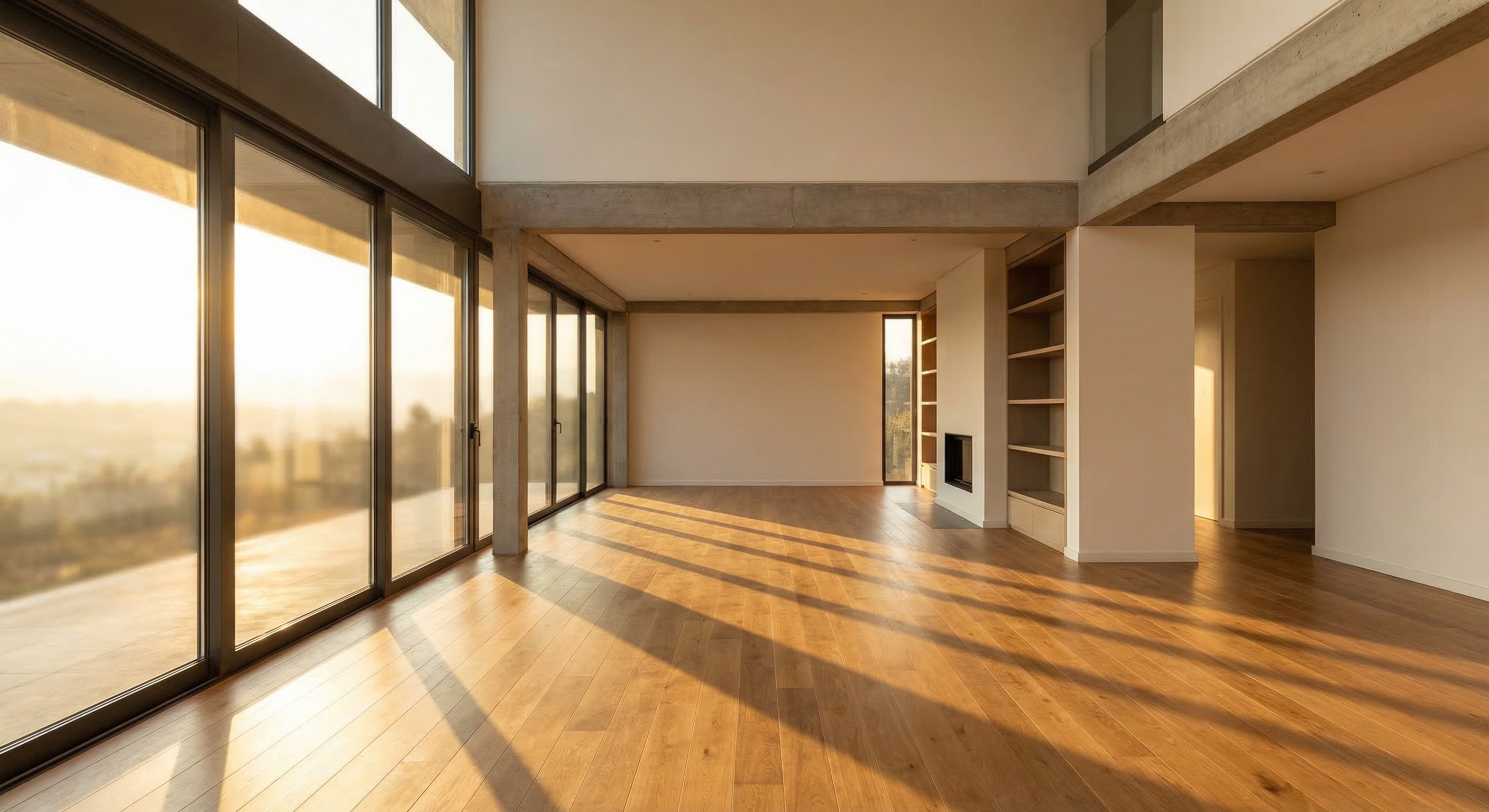
Morning: Agent wins listing agreement, schedules a photographer for that afternoon or next morning. With AI staging, the space doesn’t need to be physically staged — vacant rooms are ideal inputs. No stager coordination required.
Day 1, afternoon: Photographer shoots the property. Empty rooms, minimal prep, zero staging logistics.
Day 1, evening: Agent uploads photos to the AI virtual staging platform. Within 15–30 minutes per room, AI-rendered staging transforms bare spaces into magazine-quality, fully furnished interiors. Style selections — modern farmhouse, coastal contemporary, mid-century modern — are applied in minutes.
Day 2, morning: Agent reviews staged images, selects final versions, and builds the MLS package. Listing description drafted using the property’s key features. Marketing assets — social media graphics, email campaign visuals — assembled from staged photos.
Day 2, midday: Listing goes live.
The full cycle: 36–48 hours from signing to live on MLS. Compare that to the traditional 7–10 day timeline, and the competitive advantage compounds with every listing.
The Productivity Math: What Agents Are Doing With Reclaimed Hours
Time savings at this scale don’t just make individual listings more efficient — they reshape an agent’s entire business capacity.
Consider an agent managing four active listings simultaneously under the traditional model. Pre-market prep alone could represent 20–30 hours of coordination: scheduling calls, chasing photo delivery, briefing stagers, writing copy from scratch for each property. That’s nearly a full work week absorbed by listing prep logistics.
With an AI-powered workflow, the same four listings require a fraction of that overhead. Uploads are batch-able. AI staging applies consistent style across multiple rooms in parallel. The hours freed up redirect into the activities that actually grow a business: seller consultations, buyer outreach, listing appointments, neighborhood prospecting.
Top-producing agents aren’t just using AI to stage faster — they’re using the reclaimed capacity to take on more listings than they could previously manage without adding staff. The compound effect is significant. Each additional listing won against competitors who are still dragging through the old timeline represents both immediate commission and long-term referral capital.
Quality Without Compromise: Addressing the Hesitation
A common objection from agents considering AI virtual staging for the first time: “Will buyers be disappointed when they walk through and see empty rooms?”
This concern is real but manageable with proper disclosure and expectation-setting. The prevailing professional standard is to disclose that photos are virtually staged — many MLS systems now have explicit fields for this — and buyers across every market segment have become sophisticated consumers of this convention. They understand that a virtually staged photo communicates scale, layout, and design potential, not a literal representation of furnished inventory.
The more operationally important question is whether the staged images are realistic enough to hold buyer interest through the discovery phase — scrolling on Zillow, browsing Realtor.com, responding to an agent’s email campaign. On this measure, purpose-built AI staging tools optimized for real estate have advanced substantially, producing renders that are routinely mistaken for physical staging by both buyers and other agents.
The benchmark isn’t perfection — it’s whether the image drives a showing appointment. And the data across thousands of listings tells the same story: professionally staged images, whether physical or AI-generated, consistently outperform unformatted empty-room photos on every engagement metric that matters.
Building Speed Into Your Listing Presentation
The time savings from an AI-powered listing launch aren’t just an operational benefit — they’re a closing tool in seller consultations.
When presenting to a prospective seller, the traditional staging pitch carries an implicit caveat: “We’ll get your home looking great, but it’s going to take time and money.” The AI-powered pitch is categorically different: “We can have your home professionally presented and live on MLS within 48 hours of signing.”
That’s a competitive differentiator most sellers have never heard from any agent. In a market where sellers are weighing multiple listing presentations and processing complex financial decisions — repairs, timing, pricing strategy — the agent who offers speed without sacrificing quality presentation stands out immediately.
Agents using RealEstage.ai to power their listing workflow are incorporating this timeline directly into their CMA packages and listing presentations, positioning the AI-powered turnaround as a feature of working with them specifically. It’s not just about the photos. It’s a signal that the agent’s entire operation is optimized for performance.
The Cost Equation: AI Staging vs. Traditional Staging
The financial case is straightforward. Physical staging for a vacant property — coordinated, furnished, and maintained for the listing period — typically runs into thousands of dollars that the agent or seller must absorb before any offer is received. On properties that take longer to sell, those costs compound with monthly extension fees.
AI virtual staging operates at a fraction of that cost, typically priced per image or per property at a scale accessible to agents at any production volume. The quality ceiling continues to rise as the technology matures, while the price floor has remained competitive.
For agents who were previously advising sellers to either skip staging (to save money) or absorb significant upfront staging costs (to drive better results), AI-powered virtual staging eliminates that trade-off entirely. The listing gets professional presentation. The seller doesn’t carry a four-figure staging bill. And the agent can make this case on every listing, not just the high-margin ones.
Implementing the 24-Hour Launch Model in Your Business
Transitioning to an AI-powered listing workflow doesn’t require a wholesale operational overhaul. The practical steps:
-
Identify your current bottleneck. For most agents, it’s either photo delivery turnaround or physical staging coordination. Knowing which one adds the most days to your launch timeline tells you where AI will deliver the fastest return.
-
Run one listing as a test case. Choose a vacant property — ideal input for AI staging — and run the full AI workflow from photo upload to MLS launch. Track hours spent and compare to your baseline.
-
Build disclosure language into your standard workflow. Standard language noting that photos are virtually staged is easy to template and protects all parties from misrepresentation concerns.
-
Package the speed as a client benefit. Update your listing presentation to explicitly highlight the 24–48 hour turnaround. Sellers respond to concrete timelines.
The agents who adopt this model earliest in their market gain a window of differentiation that narrows as adoption spreads. The tools are widely accessible now. The competitive advantage belongs to agents who deploy them before their competition does.
The Compounding Edge
Speed, quality, and cost efficiency rarely converge in real estate marketing. Traditional staging could deliver quality but not speed or cost efficiency. Skipping staging could deliver speed and cost savings but not quality. AI virtual staging delivers all three simultaneously — and the agent productivity gains that follow create a compounding advantage that extends well beyond any individual listing.
The 24-hour listing launch isn’t a gimmick or a shortcut. It’s what happens when a workflow built around physical constraints gets replaced by one built around digital ones. Agents who make the shift aren’t just saving time. They’re building a listing operation that scales without proportionally scaling overhead — and in a market where capacity constraints limit growth, that’s the real competitive edge.
Related Articles
- AI Listing Optimization: Virtual Staging Tools Transforming Agent ROI in 2026
- Virtual Staging vs. Traditional Staging: A Complete Cost and ROI Guide for 2026
- The First 72 Hours: Your AI Staging Listing Launch Strategy
- The Property Presentation Scorecard: How to Grade Every Listing Before It Goes Live
- AI Virtual Staging ROI: The Agent’s Complete Guide to Measuring Returns
- The AI Listing System: Virtual Staging, Copy, and Showings in One Workflow