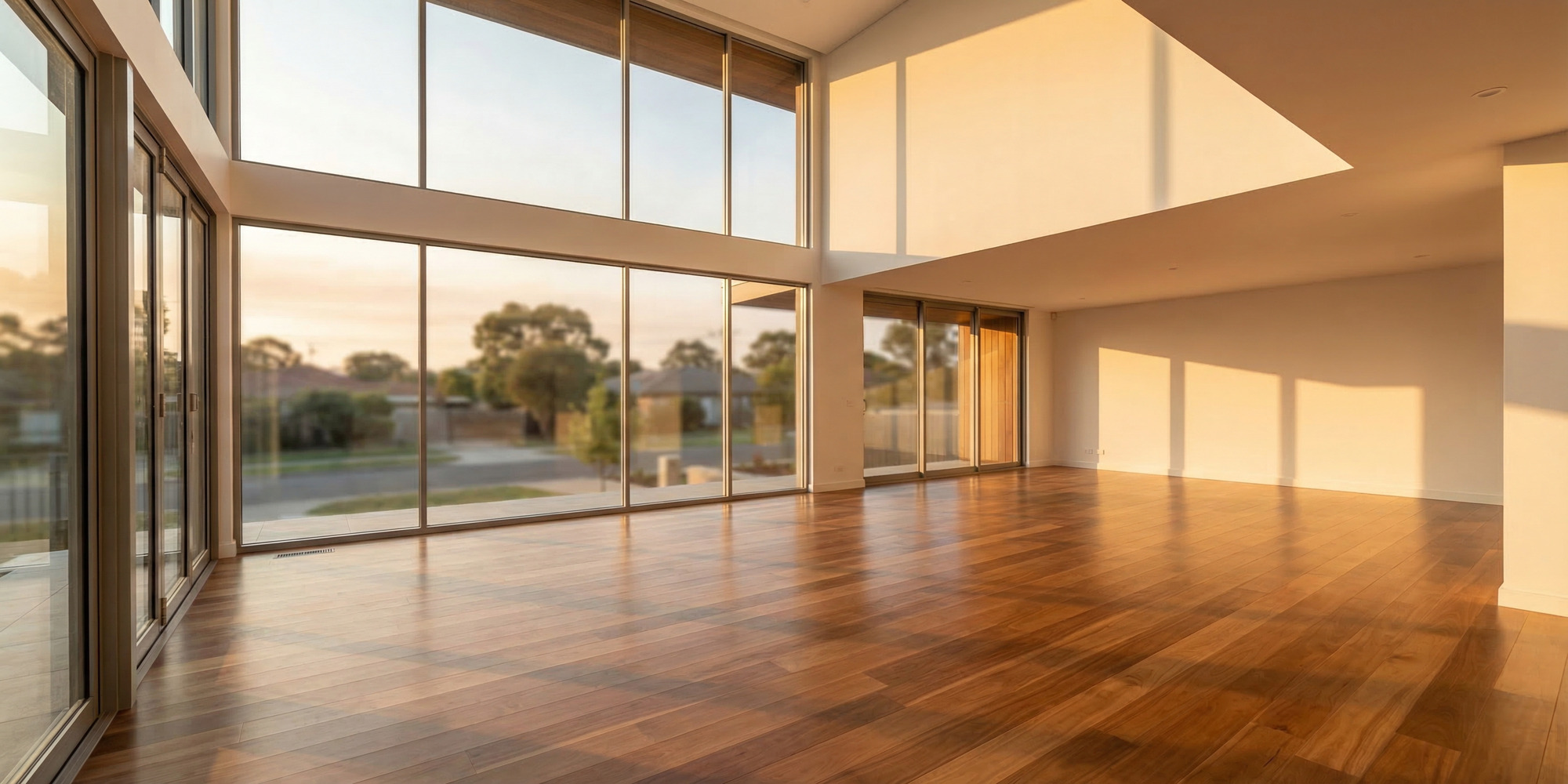
The moment a seller moves out, the clock starts — and the losses quietly begin. Vacant listings photograph poorly, buyers struggle to visualize scale and purpose, and the property lingers on market longer than it should. What looks clean and spacious in person reads as cold, cavernous, and uninviting in listing photos. Agents who list vacant properties without addressing this visual gap are leaving money on the table — and often don’t realize it until the first price reduction request arrives.
AI virtual staging has changed the math entirely. Where vacant listings once required expensive physical staging or an apologetic “imagine the possibilities” presentation, today’s AI tools can furnish and style every room in a home within 24 to 48 hours — at a cost that makes the ROI case almost trivial to close. This guide breaks down the real financial impact of vacant home listings, why traditional staging falls short as a solution, and how agents are using AI virtual staging to transform empty properties into compelling, offer-ready listings.
Why Vacant Homes Are a Harder Sell
The data on vacant listings is clear, and it isn’t flattering. A widely cited study found that vacant homes sold for approximately $11,000 less than comparable occupied properties and sat on market an average of six additional days — a combined hit to seller net proceeds that most sellers never account for at listing time. More recent market data reinforces the pattern: homes with extended days on market develop what HomeLight’s research describes as a stigma effect, where buyers assume something must be wrong, triggering lower offers or no offers at all.
The psychology driving this is straightforward. Buyers aren’t evaluating square footage and paint colors in the abstract — they’re deciding whether they can see themselves living in the space. Empty rooms strip out the visual cues that make that imaginative leap easy. Without furniture to anchor a room’s proportions, buyers misjudge scale: a 15-by-20 living room feels smaller than it is, and an open-concept floor plan reads as confusing rather than spacious. A dining room without a table becomes a mystery. A bedroom without a bed looks like a closet.
According to NAR’s 2025 Profile of Home Staging, 73% of buyers’ agents said photos were the most important factor for their clients when evaluating listings online — more important than price, neighborhood data, or written descriptions. For vacant properties, this makes professional, staged photography not a nice-to-have, but a non-negotiable input into a successful sale. The question isn’t whether to stage a vacant home. The question is how to do it efficiently and affordably.
The True Cost of “Just Leaving It Empty”
Sellers and agents often frame the decision to skip staging as cost savings. In reality, it’s a cost transfer — from the upfront staging line item to extended carrying costs and a lower final sale price.
Run the numbers on a $550,000 vacant home with an average DOM of 45 days. Carrying costs during that period — mortgage interest, property taxes, utilities, insurance — typically run between $2,500 and $4,000 per month depending on the loan balance and local tax rates. A 45-day market period means $3,750 to $6,000 in carrying costs before the property even closes. Add the statistical price discount associated with vacant listings, and the seller is absorbing a real financial hit that dwarfs any staging investment.
Then there’s the DOM stigma multiplier. The longer a vacant home sits, the more buyers question it. After 30 days, listing agents report increasing pressure to reduce price. After 60 days, that pressure becomes nearly impossible to resist. Every week the property sits empty, the negotiating leverage shifts toward the buyer. Staging — and specifically, staged photography — is what breaks this cycle before it starts, by generating the kind of early buyer interest that creates urgency and competitive dynamics in the first days on market.
Traditional Staging for Vacant Homes: The Costly Option
Physical staging is the obvious remedy for vacant properties, and in luxury markets it remains the gold standard. But the cost structure is prohibitive for the majority of listings. Professional staging for a vacant home typically runs between $1,500 and $7,200 per month, depending on the property size, market, and the staging company’s scope of work. That monthly fee covers furniture rental, delivery, setup, and eventual removal. For a 2,500-square-foot home that needs four rooms staged, agents in competitive markets have reported spending $3,000 or more just for the first month.
The timeline compounds the problem. Traditional staging setup takes 3 to 7 days from contract to photo-ready, meaning the listing window is delayed and the carrying costs continue accumulating during that window. If the home doesn’t sell in the first staging period and the contract needs to be renewed, the cost escalates again.
For agents working with move-up buyers who’ve already purchased their next home, investors liquidating portfolios, or estate executors managing inherited properties, these economics rarely pencil out. The result: vacant listings often go to market without any staging at all, a decision that virtually guarantees the outcomes described above — longer DOM, lower offers, frustrated sellers.
How AI Virtual Staging Solves the Vacant Home Problem
AI virtual staging operates on a fundamentally different cost structure than physical staging, and for vacant properties, the advantages are decisive. Rather than renting and delivering furniture to the property, AI staging tools digitally furnish the listing photos that the photographer has already captured — inserting photorealistic furniture, artwork, rugs, lighting, and decor into the empty rooms.
Platforms like RealEstage.ai are purpose-built for exactly this workflow. An agent photographs the vacant property with any professional photographer, uploads the empty-room images to the platform, selects a staging style that matches the target buyer demographic, and receives fully staged, photo-ready images within 24 to 48 hours. The cost is a fraction of physical staging — typically $20 to $100 per room depending on the platform and service tier — making a complete four-room staging job accessible for well under $200 in most cases.
The practical implications for vacant listings are significant:
- No logistics delay. There’s no furniture delivery to coordinate, no staging company schedule to work around. Once the photography session is complete, AI staging can begin the same day.
- Multiple style options. AI platforms can produce the same room in several distinct design aesthetics — modern, transitional, farmhouse, contemporary — allowing agents to A/B test which style generates the most showings before committing to one version as the primary listing photo.
- Scalable across a portfolio. For investors and agents managing multiple vacant properties, AI staging scales without cost compounding. Each property is priced per image, not per month.
- Revisions are practical. Physical staging is expensive to modify once installed. AI staging revisions — swapping furniture styles, adjusting color palettes, restaging a room for a different layout — are quick and low-cost.
The Workflow: From Empty Rooms to MLS-Ready Listings
For agents implementing AI virtual staging on vacant properties, the workflow is straightforward and can be completed within a single business day for most listings.
Step 1: Professional photography first. Shoot the vacant property with natural light maximized — this is the base layer that AI staging builds on. Composition, angle, and light quality matter here. Wide-angle shots that capture full room layouts tend to yield the most compelling staged results.
Step 2: Upload and configure. Using an AI virtual staging platform built specifically for real estate agents, upload the empty-room images and specify the staging parameters — style preference, room function, and any furnishing priorities.
Step 3: Review and select. Most platforms deliver multiple variations per room. Review the outputs with the seller before selecting the primary listing photos, which creates buy-in and often generates genuine seller excitement about the property’s new presentation.
Step 4: Disclose appropriately. This step is non-negotiable. Every MLS has specific requirements around virtually staged images, and agents must label staged photos clearly — typically “virtually staged” in the image caption — to comply with NAR’s Code of Ethics and MLS disclosure standards. Failure to disclose is an ethical violation and a liability risk. Done correctly, disclosure has no measurable negative impact on buyer interest — buyers understand the concept and are capable of distinguishing staged visuals from actual physical staging.
Step 5: Market with the staged images. Use the staged photos as the primary listing images across MLS, syndication sites, social media, and any print materials. Many agents keep both the empty-room and staged versions to show buyers the property’s flexibility.
The ROI Case: Running the Numbers
The financial comparison between AI virtual staging and leaving a vacant home unstaged is not a close call. Consider a typical scenario:
- Vacant listing with no staging: Carries for 45 days at $3,500/month in holding costs = $5,250. Sells at a 2% discount to comparable staged properties on a $500,000 home = $10,000 price reduction. Total financial impact: $15,250.
- AI virtual staging for four rooms: $80 per room × 4 rooms = $320 total cost. Results in faster, stronger-offer outcome aligned with NAR’s finding that 49% of agents observed faster sales from staging and 29% saw offer values increase by 1–10%.
Even if AI staging only partially recovers the DOM gap and price discount, the ROI is extraordinary. At $320 in staging costs versus $15,250 in potential losses, the break-even bar is exceptionally low. Agents who present this math clearly in listing consultations consistently find it accelerates seller decisions and eliminates objections about the staging investment.
Making the Case in Listing Consultations
The vacant home ROI story is one of the most persuasive tools an agent can bring to a listing consultation. Sellers who have already moved out or plan to before listing are uniquely receptive to solutions that don’t require physical re-engagement with the property — no need to return to oversee staging, coordinate access, or manage furniture rentals. AI virtual staging requires nothing from them except approving the photos remotely.
Frame it as a one-time investment that protects the seller’s equity, not an optional visual upgrade. Show the before-and-after impact using actual examples from the AI platform. Walk through the carrying cost math and explain how extended DOM erodes the net proceeds they’re counting on. When sellers see that a $300 staging decision protects $15,000 or more in net proceeds, the conversation closes quickly.
Agents using RealEstage.ai’s platform regularly report that the staged images become a centerpiece of their listing presentation materials — not just for vacant homes, but as a demonstration of the agent’s commitment to sophisticated, technology-driven marketing. In a market where sellers are evaluating multiple agents, that kind of concrete differentiation is often the deciding factor.
What This Means for Your Practice
Vacant listings are a permanent feature of any agent’s business — relocating sellers, estate properties, investor liquidations, and new construction all produce empty homes that need to go to market. Each one is an opportunity to demonstrate expertise or a vulnerability to extended DOM and price erosion.
AI virtual staging has removed the cost and logistical barriers that once made staging vacant homes impractical for most price points. The tools are fast, affordable, photorealistic, and purpose-built for the real estate workflow. The data case for staging is already established. The only remaining variable is whether the agent brings this solution to the table — or leaves the listing to compete without it.
Related Articles
- The ROI of Virtual Staging: What the Data Actually Shows
- Virtual Staging Cost in 2026: Pricing, Packages, and ROI (Agent Guide)
- AI Virtual Staging vs. Traditional Staging: The Complete 2026 Cost-Benefit Analysis
- The Data Doesn’t Lie: How AI Virtual Staging Reshapes Buyer Behavior and Drives Better Listing Outcomes
- The Listing Presentation Edge: How AI Staging Wins More Sellers Before You List
- The AI Property Presentation Playbook: How Smart Agents Are Winning More Listings and Closing Faster in 2026