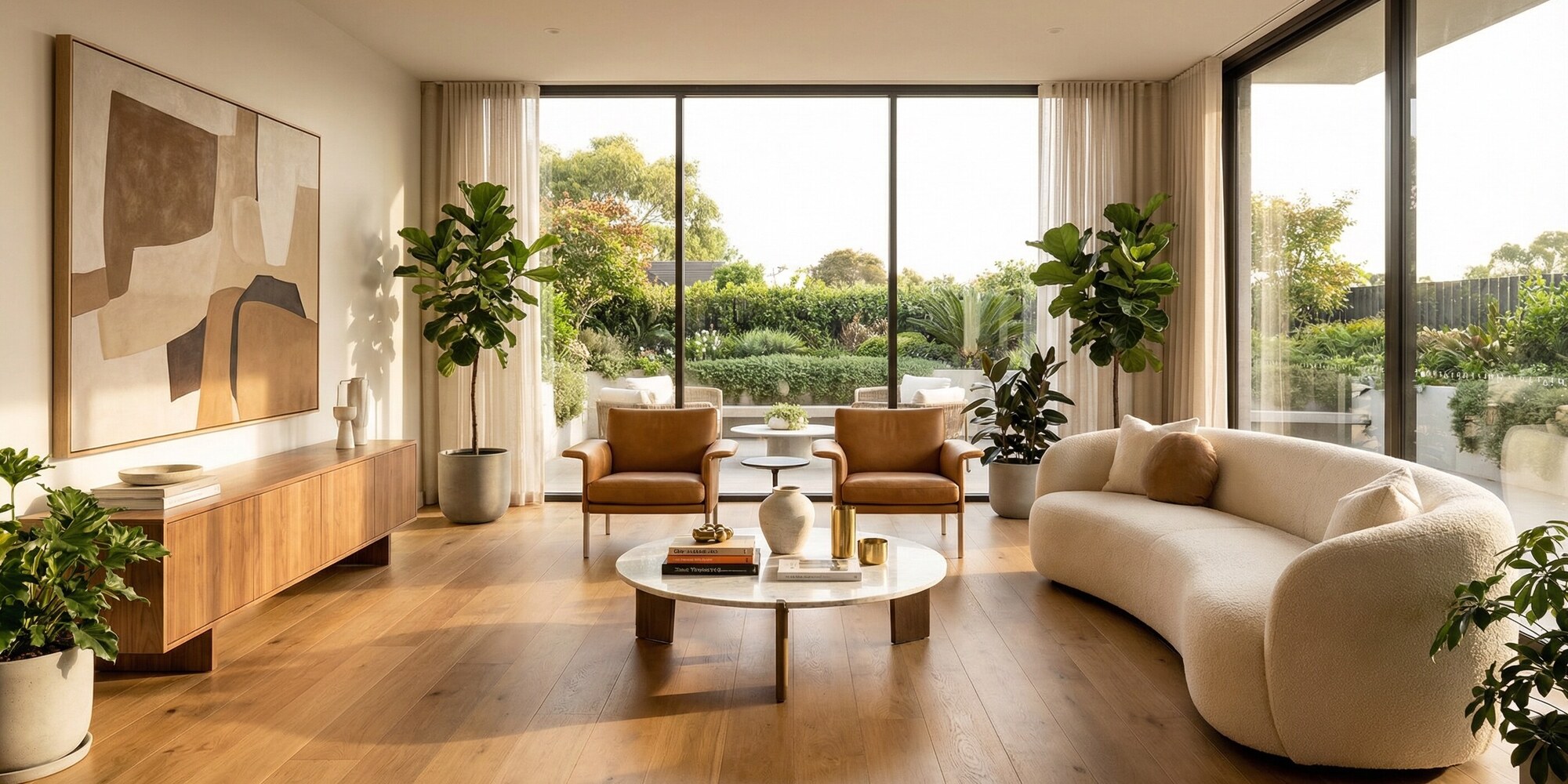
Your open house is scheduled. The sign is in the yard. But when Sunday arrives, the turnout is thin—a handful of unqualified walk-ins and no serious buyers. Meanwhile, a comparable listing three streets over has a line out the door. The difference almost certainly started online, three days before either property opened its doors. The buyer journey in 2026 begins with a photo scroll, not a drive-by, and agents who understand that reality are using AI virtual staging to engineer their open house traffic before the weekend even arrives.
The Open House Starts on a Listing Portal, Not at the Door
According to NAR’s 2025 Profile of Home Buyers and Sellers, the overwhelming majority of buyers use online tools as their first step in the home search process—well before contacting an agent or scheduling a physical visit. Listing portals like Zillow, Realtor.com, and Redfin are the new front door.
This means that the decision to attend an open house—or book a private showing—is made in seconds, based almost entirely on the quality and emotional impact of the listing’s lead photo. A buyer scrolling through 40 listings on a Saturday morning doesn’t slow down for descriptions, square footage, or school district rankings. They stop for images that make a space feel like a home.
Vacant rooms with builder-grade lighting don’t stop the scroll. Cluttered staging from a seller who “tried their best” doesn’t stop the scroll. But a beautifully furnished, well-lit, thoughtfully composed interior—the kind that AI virtual staging platforms like RealEstage.ai can produce in hours from an empty room photo—does exactly that.
The implication is direct: every agent who fails to virtually stage their listing before uploading to the MLS is leaving open house traffic on the table.
Why Listing Photos Are the Highest-Leverage Open House Marketing Tool
Open house marketing typically includes social media posts, flyers, email blasts, and MLS syndication. Agents invest time and money in all of these channels—but the creative asset that powers all of them is the listing photo.
Your social post is only as compelling as the image it showcases. Your email campaign lives or dies by its header photo. Your Zillow listing’s click-through rate is driven primarily by the first image buyers see in the search grid.
The data backs this up. NAR’s 2025 Profile of Home Staging found that 81% of buyers say professional staging helps them visualize a property as their future home—and that nearly half of sellers’ agents observed that staged homes sold faster as a result. When virtual staging delivers that same psychological trigger at a fraction of the cost and time of physical staging, the ROI compounds quickly across every marketing channel.
Consider the math: if better photos generate even a 15-20% improvement in listing click-through rate on Zillow, that translates directly into more showing requests, more open house registrations, and—ultimately—more competitive offers. The listing photo isn’t a detail. It’s the top of the entire conversion funnel.
What AI Staging Does That Traditional Staging Can’t
Physical staging has genuine value. But it operates under constraints that AI staging simply doesn’t face.
Traditional staging limitations:
- Requires 3-7 days for furniture delivery and installation before photos can be shot
- Costs $2,000–$6,000+ per listing depending on home size and rental duration
- Cannot be updated or re-styled once set without incurring additional cost
- Not viable for occupied homes with existing furniture or seller-occupied properties
- Furniture must be removed before closing, creating scheduling friction
AI virtual staging advantages:
- Photos are ready in hours, not days—enabling faster MLS and portal uploads
- Costs a fraction of physical staging per image, with no rental or logistics overhead
- Allows multiple design style variations from a single room photo for A/B testing
- Works on vacant homes, occupied homes, or properties under renovation
- Every style update is instant—restageable at any phase of the listing cycle
For an agent running multiple active listings simultaneously, the scalability advantage alone is transformative. Platforms built specifically for real estate professionals—like RealEstage.ai—allow agents to process full listing photo sets in a single workflow, producing photorealistic furnished rooms that are indistinguishable from physical staging in online formats.
Building an Open House Traffic System Around AI Staging
Converting AI staging into measurable open house attendance requires a deliberate workflow that begins well before the listing goes live. Here’s how high-performing agents are structuring that system in 2026.
Step 1: Stage Before the MLS, Not After
The most common mistake is treating staging as a post-listing task—something to do if the property isn’t generating interest. This approach inverts the entire marketing logic. AI staging should be complete before the MLS listing is submitted, so that every portal receives fully staged photos from day one.
The first 72 hours of a listing’s market life drive a disproportionate share of total views. Portal algorithms surface new listings aggressively in the first days after submission. An unstaged listing that goes live and then gets staging added later will miss the algorithmic peak entirely—and buyers who scrolled past in that window rarely return.
Step 2: Select Staging Styles That Match Your Target Buyer
Not all staging styles perform equally for all properties or markets. A modern minimalist aesthetic works in urban loft markets; warm transitional styling outperforms in suburban family neighborhoods. An AI staging platform that offers multiple style options gives agents the ability to match visual presentation precisely to buyer expectations.
Before generating your staged photos, identify your target buyer profile: Are they move-up buyers with established taste? First-time buyers who want to see themselves in the space? Investors who want to see the income potential? The staging choices that follow should mirror that buyer’s aspirational lifestyle—not the seller’s existing décor.
Step 3: Build Your Open House Campaign Around the Hero Photo
Once the staged photos are ready, identify the single strongest image from the set—typically the living room or primary bedroom—and designate it as the campaign hero across all channels:
- MLS listing: Hero image as the lead photo in the photo carousel
- Social posts: Hero image with a minimal text overlay featuring the address, date, and time
- Email campaign to buyer leads: Hero image as the header visual
- Digital ads (Facebook/Instagram): Hero image in carousel or single-image format
- Property flyers: Hero image as the dominant visual element
Consistency across channels creates recall. A buyer who sees the same compelling interior on Zillow, in their email inbox, and in their Instagram feed is far more likely to remember that listing when they’re deciding which open houses to attend on the weekend.
Step 4: Deploy a “Day of” Digital Push
The 24-48 hours before an open house are the highest-leverage window for digital promotion. Use your staged photos to execute a targeted push across:
- Instagram Stories and Reels with property photos and a countdown to open house hours
- Facebook event listing with the full staged photo gallery
- Email reminder to warm leads who’ve previously shown interest in the price range or neighborhood
- WhatsApp or text blast to buyer clients actively searching in the area
The visual quality of your AI-staged photos directly determines the engagement rate on every one of these touchpoints. A blurry, empty room generates scrolls. A photorealistic, fully furnished space generates taps, saves, and shares—which are the digital signals that translate to foot traffic.
Disclosure, Trust, and Transparency
One concern agents sometimes raise about virtual staging is buyer expectation management: what happens when someone arrives at the open house and the rooms are empty or differently furnished than the photos?
The solution is straightforward and has become standard practice: virtual staging disclosures are now expected by most MLS systems and required by many state real estate commissions. Labeling staged photos as “virtually staged” in the MLS, and confirming this on any printed materials, satisfies both ethical and regulatory requirements.
Far from undermining trust, transparent virtual staging disclosures tend to increase it. Buyers appreciate an agent who leverages professional-grade technology, and the furniture-free viewing experience at the open house often helps buyers better evaluate the actual space. Many agents report that buyers who attend after seeing virtual staging photos arrive with a clearer mental model of the home’s potential—making them more likely to submit an offer.
Tracking the Connection Between Staging and Open House Performance
Agents who treat their marketing like a business track the metrics that matter. When AI staging is part of your listing workflow, there are specific data points worth monitoring to understand its direct effect on open house attendance:
- Listing click-through rate (CTR): How often does your listing appear in search results versus how often is it clicked? Compare staged versus unstaged listings over the same time period.
- Photo view count: Most MLS dashboards and portal analytics track photo views per listing. A meaningful jump after staging photos go live is a reliable signal of improved engagement.
- Showing request rate: The ratio of listing views to showing requests is a clean proxy for how effectively your photos are converting digital interest to action.
- Open house registrations: Track sign-in counts across comparable open houses with and without AI staging. Over 10-15 open houses, clear patterns will emerge.
Advanced AI listing platforms are beginning to integrate performance tracking directly into their dashboards, giving agents a cleaner view of how their visual presentation correlates with listing outcomes—not just photo aesthetics.
The Compound Effect: Showings Become Offers Become Reputation
The downstream effects of consistently better open house traffic are significant. More showings create more competitive offer dynamics. More competitive offers mean higher closing prices—NAR’s 2025 data shows that 29% of agents reported staged homes commanded 1-10% premium pricing. Higher closing prices strengthen your track record, which powers your next listing presentation.
This compounding effect is why top-producing agents don’t treat AI virtual staging as a line item to evaluate listing by listing. They treat it as a core component of their listing system—applied consistently, across every property, at every price point. The complete listing system that integrates staging with copy and showing strategy creates a reproducible framework for generating both traffic and offers.
The cost of not staging—measured in thinner open house crowds, longer days on market, and price reductions—consistently outweighs the cost of any AI staging platform. For agents who haven’t yet built AI staging into their standard listing workflow, the open house calendar is the clearest place to see the gap.
Getting Started with AI Staging for Your Next Open House
The barrier to implementing AI virtual staging in your listing workflow has dropped significantly over the past two years. Purpose-built platforms for real estate agents have replaced early-generation tools that required technical expertise or designer involvement.
RealEstage.ai is built specifically for the real estate use case—upload empty room photos, select a design style, and receive photorealistic staged images in hours. The workflow integrates cleanly into the listing preparation timeline, with no logistics, no furniture rental, and no scheduling coordination.
For agents with an open house coming up in the next 7-14 days, the starting point is simple: photograph the property empty, run the photos through an AI staging platform, and replace your current MLS photos with the staged versions before your next portal refresh. Track click-through rate and showing requests in the days that follow. The numbers will tell the rest of the story.
Related Articles
- The Complete Listing System: How AI Virtual Staging and Listing Copy Work Together to Win More Showings in 2026
- The Online Listing Attention Problem: Why Buyers Scroll Past — And How AI Staging Stops Them
- The First 72 Hours: Why Your Listing Launch Window Determines Everything (And How AI Staging Wins It)
- The Data Doesn’t Lie: How AI Virtual Staging Reshapes Buyer Behavior and Drives Better Listing Outcomes
- AI Virtual Staging Styles Guide: Which Design Aesthetic Sells Your Listing Fastest in 2026
- AI Virtual Staging for the Spring Market: How to Win More Listings and Close Faster in 2026