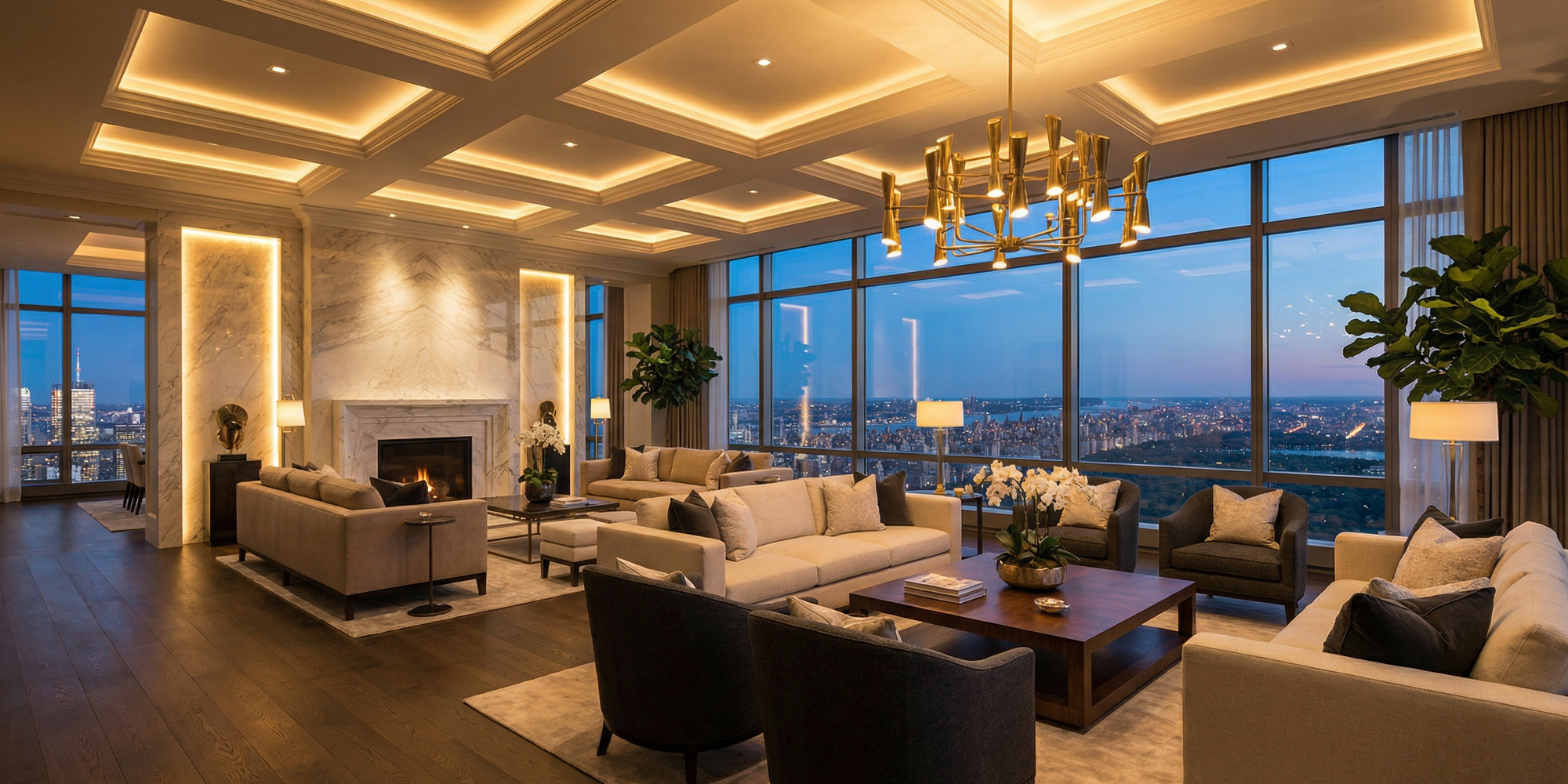
In the luxury real estate segment, the margin between a listing that lingers and one that closes in days often comes down to a single factor: how well the property is presented online before a buyer ever sets foot through the door. For homes priced above $1 million — where buyers are sophisticated, selective, and spoiled for choice — the visual quality of a listing isn’t a nice-to-have. It’s a competitive requirement.
That’s why the fastest-growing adoption of AI virtual staging isn’t happening in the entry-level or mid-market segments. It’s happening at the top of the market, where the stakes are highest and where innovative agents are finding that AI-powered staging tools give them a decisive edge in winning listings, impressing sellers, and commanding the offers that define a successful career.
Why Visual Presentation Is the Luxury Market’s Differentiator
The luxury buyer’s journey begins online. According to the National Association of Realtors’ annual report on buyer behavior, over 97% of buyers use the internet during their home search — and in the luxury segment, that number approaches universality. High-net-worth buyers, often relocating from other markets or searching from abroad, make a first cut entirely from listing photos before ever scheduling a showing.
This creates a pivotal moment for listing agents. A $3 million home photographed in an empty, echoing state doesn’t communicate its potential. It communicates absence — and absence is the enemy of desire. Traditional professional staging can fill that gap, but at a price point that strains even luxury budgets: comprehensive staging for a high-end property can run $3,000 to $10,000 or more per month, with setup fees on top. When a luxury property sits on the market for 60 or 90 days, staging costs alone can represent a meaningful hit to net proceeds.
AI virtual staging changes this calculus entirely.
The Economics of AI Staging in the Luxury Segment
When luxury real estate agents evaluate any marketing investment, they think in terms of value-per-listing and scalability. Traditional staging passes both tests poorly: it’s expensive, logistically complex, and non-repeatable. Every new listing starts from zero — new furniture, new setup fees, new monthly carry costs.
AI virtual staging inverts this model. At $25 to $75 per image depending on platform and complexity, a fully staged 12-room luxury property can be presented online for $300 to $900 total — a fraction of the first month’s traditional staging bill. When you factor in the ability to stage the property in multiple style configurations — modern minimalist, transitional, coastal contemporary — to appeal to different buyer demographics, the cost advantage becomes even more pronounced.
Platforms like RealEstage.ai have built their offerings specifically around the needs of professional agents who handle multiple listings concurrently. Rather than a one-size-fits-all approach, these tools allow agents to select from curated design style libraries, ensure furniture scale and proportion match the actual room dimensions, and receive finished images within hours rather than the days or weeks required to physically source, deliver, and arrange staging furniture.
For the luxury market, this speed advantage is significant. In competitive metro markets, new luxury listings often receive their highest traffic in the first 72 hours after going live. Getting professionally staged photography online quickly — not after a week of logistics — means capturing that initial buyer interest at full intensity.
What AI Staging Does Differently at the High End
Not all AI staging tools are created equal, and the luxury market exposes the gap between them quickly. Buyers in this segment are accustomed to precision — they notice when furniture is scaled incorrectly to a room, when a virtual sofa appears to float above a hardwood floor, or when the lighting in a staged image doesn’t match the light sources visible in the photograph. These artifacts, which might pass unnoticed in a $350,000 listing, are immediately disqualifying at $2 million and above.
The most capable AI staging platforms in 2026 address these issues through advanced photorealistic rendering. They account for natural light direction, surface reflections, shadow placement, and material texture in ways that produce images buyers genuinely cannot distinguish from professionally photographed physical staging. When AI-powered staging tools achieve this level of quality, the result isn’t just “good enough” — it’s a competitive presentation asset.
There’s also the matter of style flexibility. Luxury buyers span an enormous range of aesthetic preferences. An oceanfront property in Miami attracts different buyers than a mountain retreat in Aspen or a pre-war penthouse in Manhattan. Effective staging for each demands a fundamentally different design vocabulary. AI platforms that offer style-matched staging libraries allow agents to present the same property in multiple configurations — uploading to the listing or creating a slide gallery that shows the home’s versatility — without any additional cost or logistics.
This adaptability is a genuine differentiator. A physical staging company has the inventory they have; AI has infinite flexibility.
Room-by-Room Strategy for Luxury Properties
In the luxury segment, certain rooms carry disproportionate weight in buyer decision-making. Strategic use of AI staging means knowing where visual investment delivers the greatest return.
Primary Living Areas: Great rooms, living rooms, and open-plan entertainment spaces are the anchor of any luxury listing. These rooms set the scale and tone of the entire home. AI staging here should emphasize volume — furniture arrangements that frame the space without crowding it, art placements that draw the eye upward in rooms with high ceilings. In vacant properties, the risk of appearing cavernous is as real as the risk of looking cramped. Getting the staging scale precisely right is where AI platforms with architectural awareness outperform generic tools.
Primary Suites: Luxury buyers evaluate the primary bedroom as a retreat experience, not just a room. AI staging should convey a hotel-caliber sensibility — layered bedding, statement lighting, thoughtfully placed accent furniture. This is often a buyer’s emotional decision point, and the staging needs to support it.
Kitchens and Primary Baths: Even fully equipped luxury kitchens benefit from AI-staged accessories: bowl arrangements, counter stools, pendant light styling. In bathrooms, staged vanity accessories and towel placement transform a clinical space into a spa-like environment that photographs compellingly.
Outdoor and View Areas: Many luxury properties derive significant value from outdoor entertaining spaces, pool areas, or view terraces. AI exterior staging — placing outdoor furniture, fire features, and landscaping enhancements — translates a plain deck into a lifestyle statement. This is an area where traditional staging simply cannot compete: moving outdoor furniture to every listing is logistically impractical, but AI can stage any exterior space in an afternoon.
Winning the Luxury Listing Appointment with AI Staging
For listing agents competing for high-value inventory, the presentation meeting is the critical moment. Sellers at this price point have choices — they’re often interviewing three or four agents — and the differentiator is almost always perceived professionalism and marketing sophistication.
AI staging is now a standard component of the listing presentation toolkit for agents at the top of the market. Bringing rendered staging concepts to the listing appointment — showing the seller exactly what their home will look like when it goes live — creates an immediate, visceral impression of competence and preparation. Sellers who have never seen their own home virtually staged react strongly and positively. It makes the marketing strategy tangible.
This approach also manages expectations. Sellers who can see the staged version of their home understand what the online presentation will look like and are more invested in the marketing process. They become advocates for the listing rather than critics of it.
Using virtual staging solutions built for professional real estate workflows, agents can generate preliminary staging concepts before the appointment — sometimes staging a few key rooms from listing photos from a previous sale in the same building or neighborhood to demonstrate the platform’s quality — and arrive at the meeting with visual assets rather than abstract promises.
Selecting the Right AI Staging Platform for Luxury Work
Not every AI staging platform is appropriate for luxury listings. The evaluation criteria are different at the high end:
Photorealistic Output Quality: The single most important criterion. Luxury buyers will not engage with stagings that look digital, flat, or artificial. Look for platforms that explicitly address rendering quality and offer before/after examples from high-end properties — not just entry-level residential.
Design Style Range: A platform with three style options will not serve a diverse luxury portfolio. Look for platforms offering at least 10-15 curated style libraries, including transitional, modern luxury, Scandinavian, Mediterranean, and regionally relevant options for your specific market.
Turnaround Speed: 24-hour turnaround is the minimum acceptable standard; same-day options are a competitive advantage in fast-moving markets where listings need to go live quickly.
Scale and Proportion Accuracy: Ask specifically how the platform handles furniture scaling. Some platforms use AI to infer room dimensions from the photograph; others require manual input. The result should pass a careful visual inspection — furniture that appears to touch the floor naturally, proportional relationships between objects, and shadow consistency.
Revision Capability: High-end listings sometimes require revisions after seller feedback. A platform that makes revisions cumbersome or expensive will create friction in your workflow. RealEstage.ai addresses this with a streamlined revision process designed for agents who need to iterate quickly based on seller or buyer feedback.
The Competitive Landscape: AI Staging as a Brand Differentiator
There’s a strategic dimension to AI staging adoption that goes beyond any individual listing. Agents who build AI staging into their standard service offering at the luxury level are constructing a brand position that is increasingly difficult for traditionally-minded competitors to match.
Luxury sellers talk to each other. When a property is presented online in multiple staging styles, with photorealistic quality that exceeds the standard for physical staging in the market, it generates word-of-mouth. Other sellers see it at their neighbor’s open house or in their social feed and ask who their agent used. The visual quality of a listing becomes part of the agent’s professional identity.
This brand equity compounds over time. An agent known for exceptional listing presentations in a luxury market will win listings at a higher rate, command better commission terms, and attract referrals from the highest-value sources in the market: the sellers themselves.
Building Your Luxury AI Staging Workflow
Integrating AI staging into a luxury real estate practice is straightforward once the right platform is selected. A typical workflow looks like this:
- Photography first: Commission professional photography of the vacant or occupied property as normal. AI staging works from these base images.
- Room selection: Identify the four to six highest-impact rooms for staging — typically the main living area, primary suite, dining room, kitchen/breakfast area, and one or two secondary spaces.
- Style matching: Select one or two design styles appropriate for the property’s architecture and the target buyer demographic for that market.
- AI staging submission: Upload images and brief to your AI staging platform with style and any specific preferences (furniture tones, ceiling height, view preservation).
- Review and approve: Receive staged images within hours; review for quality and alignment with the property.
- Multi-style delivery: For exceptional properties, commission the main living areas in two different styles to provide visual variety and demonstrate the home’s design flexibility.
- Integration: Use staged images in MLS listings, marketing brochures, listing presentations, and social media.
This workflow adds minimal time to the listing preparation process and zero physical logistics — making it scalable across an entire luxury portfolio.
The Bottom Line for Luxury Agents
The luxury real estate market rewards agents who invest in craft — in the quality of their marketing, the professionalism of their presentations, and the tools they use to make every listing look its absolute best. In 2026, AI virtual staging has moved from an interesting experiment to a professional standard at the top of the market.
For agents serious about building a luxury practice, the question is no longer whether to use AI staging. It’s which platform to trust with your most valuable listings. The right tool, applied consistently, will elevate every listing you take, differentiate your brand in a crowded market, and give your sellers the presentation-quality advantage they expect when they invite you to represent their most valuable asset.
Related Articles
- How AI Virtual Staging Reduces Days on Market: The 2026 Agent’s Playbook
- Win More Listing Appointments with AI Virtual Staging
- Real Estate Visual Marketing, Photography, and AI Staging in 2026
- AI Virtual Staging for Fixer-Upper and As-Is Listings
- Vacant Listings and AI Virtual Staging: The Real Cost of Leaving Properties Empty and Unstyled
- Virtual Staging Cost and Pricing Guide for 2026