Every day a single-family rental sits vacant is money walking out the door. At the national median rent for a single-family home — hovering around $2,100 per month in early 2026 — an empty property costs its owner roughly $70 per day in lost income. Multiply that across a portfolio of three, five, or ten properties, and the math becomes urgent fast. For investor-agents managing rental turnover, the question isn’t whether to market aggressively — it’s which tools produce the fastest lease-up with the least friction.
AI virtual staging has become one of the most practical answers to that question. What started as a sales-side tool for occupied and vacant listings is now reshaping how investor-agents market rental properties: turning bare, uninviting rooms into warmly furnished, move-in-ready spaces that attract qualified tenants faster — and at a fraction of the cost of traditional staging or re-photography.
The Single-Family Rental Marketing Gap
There are an estimated 19 million single-family rental homes across the United States, according to the Harvard Joint Center for Housing Studies. Unlike multifamily apartment complexes that typically have professional marketing budgets, model units, and dedicated leasing teams, the single-family rental market is largely owned by small individual investors — landlords who may hold two, five, or fifteen properties and handle marketing themselves or through a limited property management operation.
The result is a market flooded with subpar listing photos: smartphone shots of empty rooms with flat overhead lighting, vacant living areas that feel institutional, and bedrooms stripped of anything that would help a prospective tenant picture their life there. These listings get viewed — rental inventory search volume has been elevated throughout 2025 and into 2026 as rental demand remains structurally high — but they convert at a lower rate than they should because buyers (here, renters) make fast decisions based on visual quality.
Research from Zillow consistently shows that listings with higher-quality photos receive significantly more views and inquiries. While this data is most often cited in for-sale contexts, the underlying psychology applies equally to rentals: prospective tenants browsing dozens of listings on a mobile device are making rapid, visual-first judgments. A bare, beige room with mismatched shadows doesn’t invite anyone to click “Schedule a Tour.”
Why Traditional Staging Doesn’t Work for Rentals
The economics of traditional physical staging break down quickly in the rental context. Physical staging for a single-family rental typically costs between $1,200 and $3,500 for an initial installation, plus $400–$800 per month in rental fees for the furniture. For a property leasing at $2,100 per month, those numbers represent a meaningful margin hit — especially when the staging is only needed for photos and a brief showing period.
Beyond cost, the logistics are cumbersome. Physical staging requires coordinating delivery windows, managing furniture during showings, and ultimately removing everything before tenant move-in. For an investor-agent managing multiple turnovers simultaneously — a common reality in spring leasing season — the coordination overhead alone can push back listing dates by days.
AI virtual staging eliminates both problems. A vacant room photographed once can be digitally furnished in hours. The styled images go live immediately. No truck, no monthly furniture fee, no move-out coordination. For investor-agents running high-volume rental operations, the workflow compression is significant.
What AI Staging Actually Does for Rental Listings
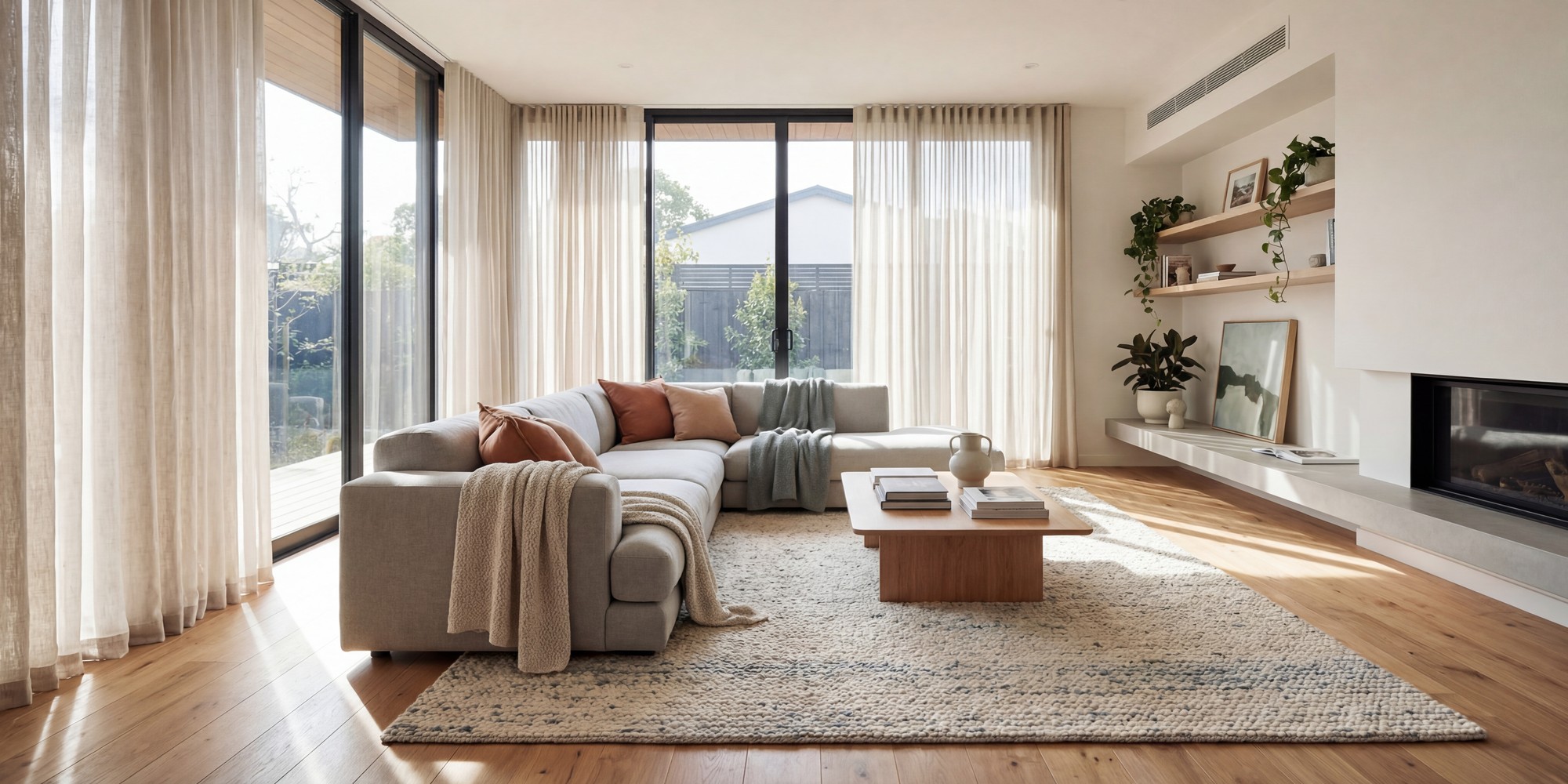
AI virtual staging platforms take photos of empty rooms and use machine learning models to add photorealistic furniture, rugs, artwork, lighting, and décor. The result looks identical to a professionally staged photo — because the furniture placement and lighting are rendered with the room’s actual geometry and natural light taken into account.
For rentals specifically, this has several practical implications:
Showing the space at its best potential. Vacant rooms often feel smaller than they are because there’s no furniture to define scale or function. A digitally staged living room with a sofa, coffee table, and media unit communicates square footage, ceiling height, and layout in a way that an empty room simply doesn’t. Prospective tenants stop wondering whether their furniture will fit and start imagining their own belongings in the space.
Matching staging style to tenant demographics. An investor-agent renting a three-bedroom suburban home targets a different tenant than one renting a compact urban bungalow. AI staging platforms like RealEstage.ai allow agents to select design styles — contemporary, transitional, Scandinavian, farmhouse — so the visual presentation resonates with the likely renter profile. A young family browsing a suburban rental responds to warm transitional staging; a remote-working professional looking at a single-bedroom city home responds to clean modern aesthetics.
Enabling multi-room staging at scale. A four-bedroom house might need five to seven rooms staged. With physical furniture, that cost compounds significantly. With AI staging tools, each additional room adds only incremental cost — typically $20–$50 per image — making full-property staging economically viable even for properties at the lower end of the rent range.
The Vacancy Cost Calculation
Understanding the vacancy math is what separates investor-agents who treat AI staging as an optional extra from those who treat it as a standard operating procedure.
Consider a property renting at $2,100/month — roughly $70/day. Traditional staging plus photography preparation might take a week to schedule and execute, meaning the property sits vacant for seven additional days while logistics are coordinated. That’s $490 in additional lost rent, before accounting for the staging cost itself.
AI virtual staging, by contrast, can turn around a complete set of listing-ready images within 24–48 hours of the photography shoot. For a property using a platform that delivers same-day results — which AI staging platforms for real estate increasingly offer — the total prep-to-listed timeline compresses to under two days. The $490 in avoided vacancy loss alone justifies the investment in AI staging multiple times over.
Across a portfolio of ten properties, each turning over once per year, the aggregate impact is substantial: tens of thousands of dollars in preserved rental income, simply by reducing the average days-to-listed by five to seven days.
Room-by-Room Strategy for Rental AI Staging
Not every room in a rental property carries equal weight in the leasing decision. Investor-agents who prioritize strategically get the most value from their AI staging budget.
Living Room and Main Common Areas
The living room is typically the lead photo in a rental listing and the first space a prospective tenant evaluates. Stage this room fully: sofa, coffee table, area rug, accent chairs if space allows, and at least one piece of wall art. The goal is to create a warm, aspirational visual that signals the property is livable and well-maintained.
Kitchen
For rentals, the kitchen photo matters more than agents often give it credit. Prospective tenants spend significant time evaluating kitchen functionality. While AI staging can’t change the actual kitchen layout or appliances, a staged dining area adjacent to the kitchen — a table, chairs, pendant-light-implied warmth — significantly improves the perceived quality of the space. Even a simple counter-staging effect (clean lines, a styled island if present) elevates the listing photo.
Primary Bedroom
The primary bedroom is the second most-viewed room in most rental listings. Stage it with a bed frame, bedding, nightstands, and at minimum one lamp. The room should communicate rest and scale — “my California King will fit here” is the implicit reassurance a well-staged bedroom delivers.
Secondary Bedrooms and Home Office
With remote work remaining structurally elevated through 2026, secondary bedrooms staged as home offices have consistently strong appeal for the renter demographic most likely to afford mid-market and above single-family rentals. Consider staging one secondary bedroom as a functional workspace rather than a second sleeping room — this differentiates the property in a crowded rental market.
Bathrooms and Utility Spaces
AI staging typically doesn’t apply to bathrooms (counters and fixtures dominate, limiting staging opportunity) or laundry areas. Focus the staging budget on the rooms above, and ensure that bathroom photos are taken with professional lighting to compensate.
Disclosure Practices for Rental AI Staging
As AI-staged rental photos become more common, the best practice — and in some jurisdictions, an emerging legal expectation — is to disclose that listing photos have been digitally enhanced with virtual furniture. A simple caption or listing disclaimer (“Photos may include AI-generated virtual staging”) protects both the agent and the property owner while setting accurate expectations for prospective tenants.
This transparency doesn’t hurt leasing performance; in fact, it often enhances trust. Sophisticated renters, particularly in competitive markets, understand the practice and appreciate the honesty. What matters is that the room dimensions, condition, and features shown in the photos are accurate representations of the actual property.
The National Association of REALTORS® Code of Ethics requires that property representations be truthful and not misleading — a standard that AI-staged photos satisfy as long as they accurately represent the physical space and any digital enhancements are disclosed.
How Investor-Agents Are Building AI Staging Into Standard Turnover Workflows
The most efficient investor-agents in 2026 are treating AI virtual staging not as a one-off creative decision but as a standard step in the property turnover checklist — as automatic as scheduling the cleaning crew or updating the lease template.
The workflow looks like this:
- Tenant move-out. Property is professionally cleaned and any maintenance items addressed.
- Photography. A real estate photographer shoots the property — empty, clean, well-lit. This session takes 60–90 minutes and produces the raw image set.
- AI staging. Raw images are uploaded to a platform like RealEstage.ai where room-appropriate design styles are selected and staging is rendered. Turnaround: same day to 24 hours.
- Listing published. Staged images go live on Zillow Rental Manager, Apartments.com, Facebook Marketplace, MLS (where allowed), and the property management firm’s own site.
- Showings begin. With visually compelling photos live within 48 hours of vacancy, the leasing clock starts running immediately.
This workflow can reduce the average tenant-move-out to new-tenant-signed timeline by one to two weeks — a difference that directly translates to rental income preserved.
Choosing the Right AI Staging Platform for Rental Volume
Not all AI virtual staging tools are designed for the specific demands of rental marketing. When evaluating platforms, investor-agents should consider:
Turnaround speed. Rental turnover windows are often tight. Platforms that deliver styled images within 24 hours — or same-day — are more valuable than those with 48–72 hour queues.
Design style library. The ability to select styles that match the target tenant demographic matters more in rentals than in sales, where broader market appeal is the goal.
Per-image pricing vs. subscription. For agents managing variable turnover volumes, per-image pricing offers more flexibility than fixed monthly subscription plans. At high volume, subscriptions become cost-effective; at lower turnover, pay-as-you-go preserves margin.
Photo realism and edit quality. Poorly rendered staging — furniture that floats, lighting that doesn’t match the room, shadows that look artificial — hurts rather than helps leasing performance. Review platform sample outputs carefully before committing.
RealEstage.ai is purpose-built for real estate agents and investor-agents managing multiple properties, offering fast turnaround, a broad design style library, and the kind of photorealistic rendering quality that holds up under scrutiny on mobile screens where most rental searches now happen.
The Competitive Positioning Argument
Beyond the economics, there’s a market positioning case for investor-agents who consistently deliver high-quality rental listings: it wins more management contracts.
Property owners who have experienced the difference between a slow-lease, low-photo-quality listing and a well-staged, fast-leasing one become advocates for the agent who made it happen. In a referral-driven industry, an investor-agent known for producing rental listings that consistently lease in under two weeks — compared to the market average of three to four weeks — has a meaningful competitive advantage when soliciting new management clients.
AI virtual staging is the single highest-ROI lever for improving rental listing quality. It costs less than a single day of vacancy loss, takes less time than any alternative, and produces results that are indistinguishable from physical staging to the prospective tenant scrolling through listings on their phone.
For investor-agents serious about building a scalable rental management practice in 2026, the only question worth asking is why they haven’t made it standard yet.
Related Articles
- Vacant Listings Are Costing You Deals — Here’s How AI Virtual Staging Changes the Math
- AI Virtual Staging for Investment Properties: The Agent’s Guide for 2026
- AI Virtual Staging for Second Homes and Vacation Rentals
- How AI Virtual Staging Reduces Days on Market: The 2026 Agent’s Playbook
- Real Estate Visual Marketing, Photography, and AI Staging in 2026
- AI Virtual Staging for Fixer-Upper and As-Is Listings