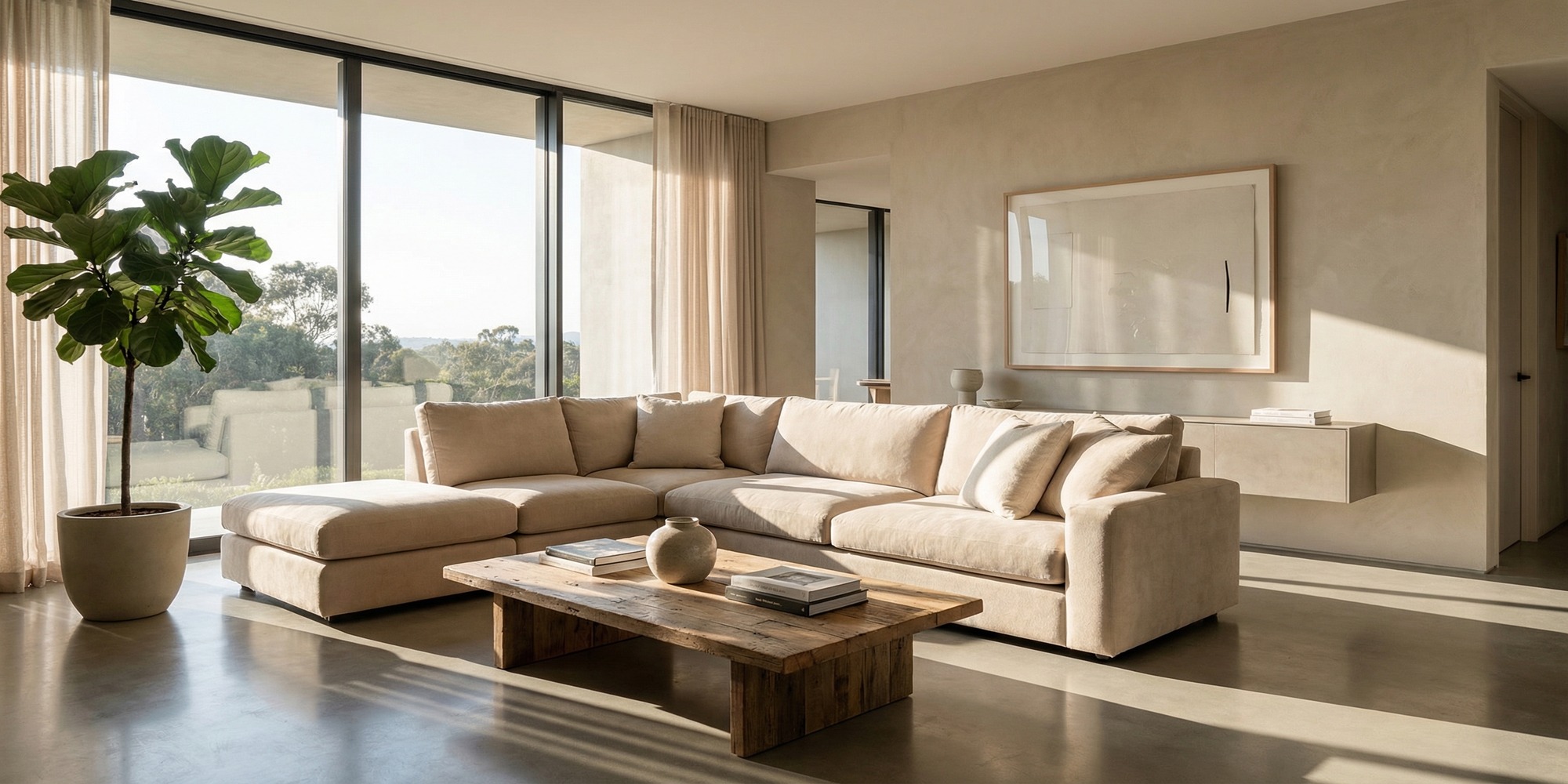
Ask the top 10% of producing agents in any market what they changed to get there, and you’ll hear the same categories: lead generation systems, follow-up discipline, and listing presentation. The last one is where AI virtual staging enters the picture — and for a growing cohort of high-volume agents, it’s become as non-negotiable as professional photography. They don’t debate it listing by listing. They don’t reserve it for luxury properties. Every listing they take goes live with AI-staged visuals. No exceptions.
This isn’t aesthetic preference. It’s competitive strategy built on a clear understanding of how buyers behave online, how listing algorithms reward engagement, and how first impressions compound into final sale prices. The agents who’ve made this leap aren’t spending more time on each listing — they’re spending it better, compressing the timeline from signed agreement to polished market presentation into a fraction of what it used to take.
Here’s the full logic behind why serious agents have stopped treating AI staging as optional.
The Economics of the Online First Impression
Before any buyer books a showing, they make a judgment about your listing in approximately two seconds. That judgment is made on a single image — the hero photo displayed in search results on Zillow, Realtor.com, Redfin, and every MLS-connected portal. If that image doesn’t create an immediate sense of aspiration and livability, the buyer scrolls to the next result.
This isn’t speculation. Research compiled by Matterport found that 83% of buyers describe listing photos as crucial to their decision-making process. And according to data analyzed by PhotoUp, listings with professional photography spend an average of 89 days on market — compared to 123 days for listings with lower-quality visuals. That’s 34 days of carrying costs, price reduction exposure, and negotiating leverage erosion, simply attributable to the quality of listing photography.
AI virtual staging amplifies this dynamic by solving the hardest visual problem in real estate: the empty room. Vacant spaces read as smaller than they are, offer buyers no emotional anchor, and create a blank-slate confusion rather than the aspirational warmth that drives showing decisions. AI virtual staging platforms like RealEstage.ai resolve this in minutes — transforming bare rooms into fully furnished, design-forward spaces that perform like luxury listings in search results.
The economics are straightforward. The cost of AI staging a property ($150–$300 for a full set of rooms) is immaterial relative to the value of even one additional showing request, one competing offer, or one extra week shaved from time on market.
Why “Good Enough” Photography No Longer Works
The market standard for listing visuals has been rising steadily for a decade. Professional DSLR photography became the baseline. HDR processing became common. Wide-angle composition is expected. In today’s environment, buyers — particularly those in their 30s and 40s who represent the largest cohort of active purchasers — have been trained by HGTV, luxury home content on social media, and real estate platforms to expect magazine-quality presentation as the default.
When a listing doesn’t meet that expectation, the penalty isn’t neutral. Buyers don’t give the property the benefit of the doubt and schedule a showing anyway. They apply a negative prior — an assumption that a seller or agent who didn’t invest in quality presentation may have similarly neglected other aspects of the property. It’s an irrational heuristic, but it’s a reliable one.
This is the environment high-performing agents have adapted to. They understand that a listing with mediocre visuals isn’t just competing less effectively — it’s actively generating negative signals. The solution isn’t to spend $5,000 on physical staging for every listing. The solution is to deploy AI virtual staging selectively and strategically to ensure every photo set crosses the visual threshold that triggers buyer engagement.
The Competitive Positioning Argument
Here’s the conversation most sellers don’t know how to have with their agents: why would a buyer choose your listing over the one next door? Both properties are similarly priced. Both have comparable square footage and neighborhood amenities. The difference, in many cases, comes down entirely to visual presentation.
Top agents understand that listing presentation is their most controllable variable in a market where they can’t control interest rates, inventory levels, or buyer sentiment. An agent who consistently brings superior listing visuals to every property they represent wins the marketing competition even when the product itself is comparable.
This matters for two reasons. First, it translates directly into better seller outcomes — more showings, more offers, better prices. Second, it feeds the agent’s reputation and referral pipeline. Sellers talk. A client who got 14 showings in the first week, received multiple offers, and closed above asking becomes the agent’s most powerful marketing asset. That result starts with visual presentation.
RealEstage.ai’s AI staging tools give agents a scalable competitive advantage in this dimension — one that doesn’t require hiring a stager, renting furniture, or coordinating logistics that add days to the listing timeline.
What the Listing Timeline Actually Looks Like
One of the persistent misconceptions about staging is that it adds time to the listing process. For physical staging, that’s true — the logistics of furniture delivery, setup, and photography coordination can add 10–14 days to the pre-listing timeline. For AI virtual staging, the inverse is often true: it compresses the timeline by eliminating the dependency on physical staging availability.
A typical AI-assisted listing preparation workflow looks like this:
Day 1: Property Photography
A professional photographer shoots the property. Empty rooms are photographed in their vacant state — this is intentional, since clean, furniture-free shots produce the best AI staging inputs. A full property shoot takes three to five hours, with images delivered same-day or next morning.
Day 1–2: AI Staging Generation
Listing photos are uploaded to the staging platform. Using RealEstage.ai, the agent selects design styles calibrated to the target buyer profile — modern minimalist, warm transitional, coastal, or luxury contemporary. AI-generated staged images are returned within minutes. A complete four-bedroom property is fully staged in under an hour.
Day 2: Review and Selection
The agent reviews staged outputs, selects the best versions of each room, and assembles the final photo package. This step takes 20–30 minutes.
Day 3: MLS Launch
The listing goes live with a complete, professional photo set that includes both vacant documentation photos and AI-staged aspirational images. The listing hits the new-listing algorithm boost at peak visual presentation — not a week later after physical staging was arranged.
For agents running multiple active listings simultaneously, this workflow creates a consistent, reproducible system. Every listing follows the same process. Every listing launches with the same visual standard. The output is predictable.
Matching Staging Style to Buyer Demographics
One capability physical staging cannot replicate is the ability to generate multiple style variations from the same photography session. A physical stager commits to one design direction. AI staging lets agents test or select across multiple aesthetics — targeting the visual language that will resonate most strongly with the likely buyer pool.
A downtown loft in a tech-centric urban market calls for a different visual presentation than a four-bedroom colonial in a family-oriented suburb. A two-bedroom condo marketed to first-time buyers needs different staging cues than a penthouse targeting move-up buyers from luxury properties. These aren’t interchangeable.
Agents who are thoughtful about style selection extract more conversion from the same photography budget. A transitional staging style designed to appeal to the broadest buyer demographic in a price range will generate more showing requests than a staging aesthetic that resonates with only a narrow profile. Leading AI staging platforms offer design style options that span the full range of contemporary residential aesthetics — from modern minimalist to warm transitional to luxury contemporary — allowing agents to match the staging to the property and its market rather than defaulting to a single house style.
The Seller Conversation: Getting Buy-In
Some agents hesitate to propose AI virtual staging because they anticipate pushback from sellers on cost or on principle. In practice, this resistance is much rarer than expected — and almost always dissolves when agents present the data.
The conversation typically goes like this: “The first week your home is on the market is the most valuable marketing window you have. Every buyer searching in your price range will see your listing. What they see in those first photos determines whether they come to look. AI staging ensures they see your home at its best — furnished, warm, and move-in-ready — for about the same cost as a nice dinner.”
That framing almost universally lands. Sellers want their home to present well. They understand the connection between visual presentation and buyer interest. What they often don’t know is how affordable and fast AI staging has become. Once they understand that the barrier is $150–$300 and a 24-hour turnaround — not $5,000 and a week’s disruption — the conversation shifts from whether to stage to which rooms to prioritize.
The agents who’ve embedded this into their listing presentation consistently report that it becomes a selling point in itself. Sellers perceive it as evidence of a proactive, tech-forward agent who is actively investing in their listing’s success.
The Data on Staged vs. Unstaged Properties
The performance difference between staged and unstaged listings has been consistently documented. NAR’s Profile of Home Staging reports that 49% of sellers’ agents have seen staging reduce a property’s time on market. Nearly 29% report that staging resulted in offer prices 1–10% above comparable unstaged properties.
At the median U.S. home price, a 1–5% improvement in sale price represents $5,000–$25,000 in additional net proceeds for the seller. The cost of AI staging a full property — even at the higher end of platform pricing — is recovered in the first percentage point of price improvement. The ROI arithmetic is unambiguous.
What’s changed in 2026 is accessibility. AI virtual staging platforms have brought professional staging economics within reach of every listing, not just the luxury tier. An agent handling a $350,000 listing in a mid-tier market can now apply the same visual strategy previously reserved for $2 million properties — because the cost has dropped from thousands to hundreds.
Building a Standard That Scales
The agents who’ve made AI staging a non-negotiable haven’t done so by making a case-by-case decision every time they take a new listing. They’ve built a standard — a defined minimum presentation level that every listing they represent must meet before it goes live.
This standard has two practical effects. First, it eliminates the decision fatigue of evaluating each listing individually. The workflow is defined; execution is automatic. Second, it creates a reputation in the market — a recognizable visual quality that signals professionalism and attention to detail across an agent’s entire portfolio.
Adopting an AI virtual staging platform like RealEstage.ai as the backbone of that standard gives agents a consistent, scalable tool that integrates with any photography workflow. Whether an agent is handling two listings a month or twenty, the process is the same and the output quality is consistent.
The Strategic Reality in 2026
Every technology wave in real estate follows the same adoption curve. Early adopters gain disproportionate advantage while the majority of the market is still evaluating. As adoption broadens, the advantage narrows — the new capability becomes the baseline expectation rather than the differentiator. Agents who adopt late are perpetually catching up to a standard set by those who moved first.
Professional photography followed this curve. Drone photography followed it. 3D virtual tours followed it. AI virtual staging is following it now — with adoption accelerating significantly since Zillow introduced AI staging features in September 2025, effectively signaling to the market that AI-powered visual enhancement is no longer an edge-case tool but a mainstream expectation.
The agents refusing to list without AI staging today aren’t ahead of their time. They’re in the early majority of an adoption curve that is moving quickly. The question isn’t whether AI staging will become the baseline standard — it already is in the most competitive markets. The question is how quickly that standard extends to every price tier and geography.
The answer, based on current trajectory, is: faster than most agents are prepared for.
Related Articles
- AI Virtual Staging vs. Traditional Staging: The Complete 2026 Cost-Benefit Analysis
- The First 72 Hours: Why Your Listing Launch Window Determines Everything (And How AI Staging Wins It)
- The Virtual Staging Conversion Funnel: How AI Turns Listing Photos Into Closed Deals
- The AI Staging Business Case: What the Data Says About ROI in 2026
- Virtual Staging Styles That Match Your Buyer: A 2026 Market Guide
- The Buyer’s First Impression: How AI Is Winning the Listing Attention War in 2026