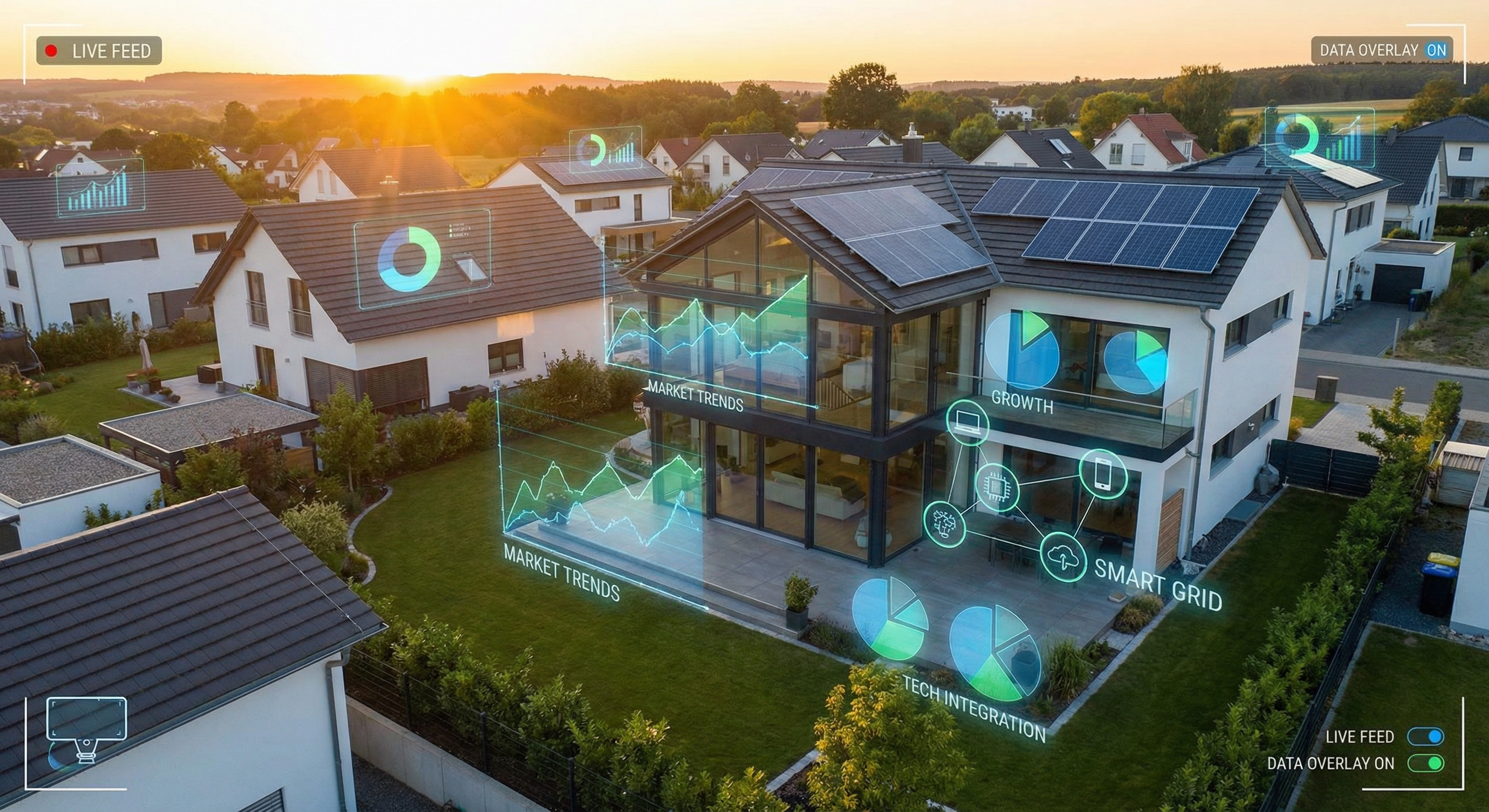
The housing market has always been shaped by economic forces — interest rates, employment, demographics, and supply constraints. But in 2026, technology is emerging as an equally powerful force, fundamentally altering how properties are valued, transacted, and experienced.
Here are five market trends being driven by technology that every real estate professional should understand.
1. AI-Driven Dynamic Pricing Is Replacing Static Valuations
Traditional home pricing relied on static comparable sales analysis — what similar homes sold for in the past few months. AI-driven pricing models operate differently. They incorporate real-time data streams including:
- Current listing activity and days on market
- Mortgage rate fluctuations and their impact on buyer purchasing power
- Local economic indicators (employment, income growth, migration patterns)
- Seasonal demand patterns and predictive buyer behavior models
- Neighborhood-level sentiment analysis from social media and review platforms
The result is pricing that’s more dynamic and responsive to market conditions. Sellers who use AI-assisted pricing are seeing fewer price reductions and shorter marketing periods because their initial list price more accurately reflects current demand.
The trend to watch: As these tools become mainstream, the traditional price-reduction cycle that characterizes many listings may become increasingly rare. Properties will be priced right from day one.
2. Tokenized Real Estate Is Opening Fractional Ownership
Real estate tokenization — dividing property ownership into blockchain-based digital tokens — is moving from concept to reality. Platforms now allow investors to purchase fractional ownership in residential and commercial properties for as little as $100.
This is significant for three reasons:
- Accessibility: Investors who couldn’t afford a $300,000 rental property can now own a fraction of one and earn proportional returns
- Liquidity: Real estate has always been illiquid. Tokenized shares can be traded on secondary markets, giving investors flexibility that traditional real estate ownership lacks
- Diversification: Instead of concentrating capital in one property, investors can spread across multiple properties, markets, and asset types
The market is still early, and regulatory frameworks are evolving. But the trajectory is clear — fractional ownership will expand the real estate investor base significantly.
3. Smart Home Technology Is Becoming a Pricing Factor
Smart home features are transitioning from novelty to expectation. Properties with integrated smart home systems — automated climate control, security, lighting, and energy management — are commanding measurable premiums in many markets.
But the impact goes beyond the initial sale price. Smart home technology is increasingly factored into:
- Home appraisals: Appraisers are beginning to account for smart home infrastructure as a value-adding improvement
- Insurance premiums: Smart security and water leak detection systems can reduce insurance costs, improving the total cost of ownership
- Energy efficiency: Automated energy management systems reduce utility costs, making properties more attractive to cost-conscious buyers
- Rental premiums: Tenants are willing to pay more for smart-enabled units, improving rental yields for investors
The agents who understand smart home technology well enough to articulate its value proposition are at an advantage in both listing presentations and buyer consultations.
4. Remote Work Is Permanently Reshaping Geographic Demand
The remote work shift isn’t news — but its second-order effects on housing markets are still playing out. Technology platforms that enable distributed work have created a sustained migration pattern away from high-cost urban centers toward secondary and tertiary markets.
What’s different in 2026 is the data infrastructure around this trend. AI-powered market analysis tools can now:
- Track migration patterns in near real-time using aggregated anonymized data
- Predict which markets are likely to see increased demand based on remote work adoption rates
- Identify emerging neighborhoods before they hit mainstream awareness
- Correlate broadband infrastructure quality with price appreciation
For investors and agents, understanding these patterns is a competitive advantage. The markets that benefited most from the remote work shift weren’t always obvious — and the next wave of opportunity markets will require the same kind of data-driven analysis.
5. PropTech Is Streamlining the Transaction Process
The real estate transaction process has historically been paper-heavy, slow, and opaque. Technology is compressing the timeline:
- Digital closings are reducing the time from contract to close
- AI-powered title search is accelerating title examination from days to hours
- Automated underwriting is speeding up mortgage approvals
- Smart contracts on blockchain are beginning to automate escrow and settlement functions
The cumulative effect is a transaction process that’s faster, more transparent, and less prone to delays. Markets where digital transaction tools are widely adopted are seeing shorter close times, which in turn affects inventory dynamics and market velocity.
What This Means for Professionals
Technology isn’t replacing real estate professionals — it’s raising the bar. The agents, brokers, and investors who thrive will be those who understand these tools well enough to leverage them and explain their implications to clients.
The fundamental job hasn’t changed: help people make the biggest financial decision of their lives with confidence. But the tools available to do that job well have never been more powerful.
Staying informed about real estate technology isn’t optional anymore. It’s a core professional competency.
Stay ahead of the curve with our article on 7 AI Tools Transforming Real Estate and learn how agents are using AI for Property Marketing.
Frequently Asked Questions
How is technology changing the housing market in 2026?
Technology is reshaping the housing market through AI-driven dynamic pricing, tokenized fractional ownership, smart home premium pricing, remote work migration analytics, and streamlined digital transaction processes.
What is real estate tokenization?
Real estate tokenization divides property ownership into blockchain-based digital tokens, allowing investors to purchase fractional shares in properties for as little as $100 and trade them on secondary markets.
Are smart home features increasing property values?
Yes. Properties with integrated smart home systems are commanding measurable premiums. Smart features are increasingly factored into appraisals, insurance premiums, energy costs, and rental yields.