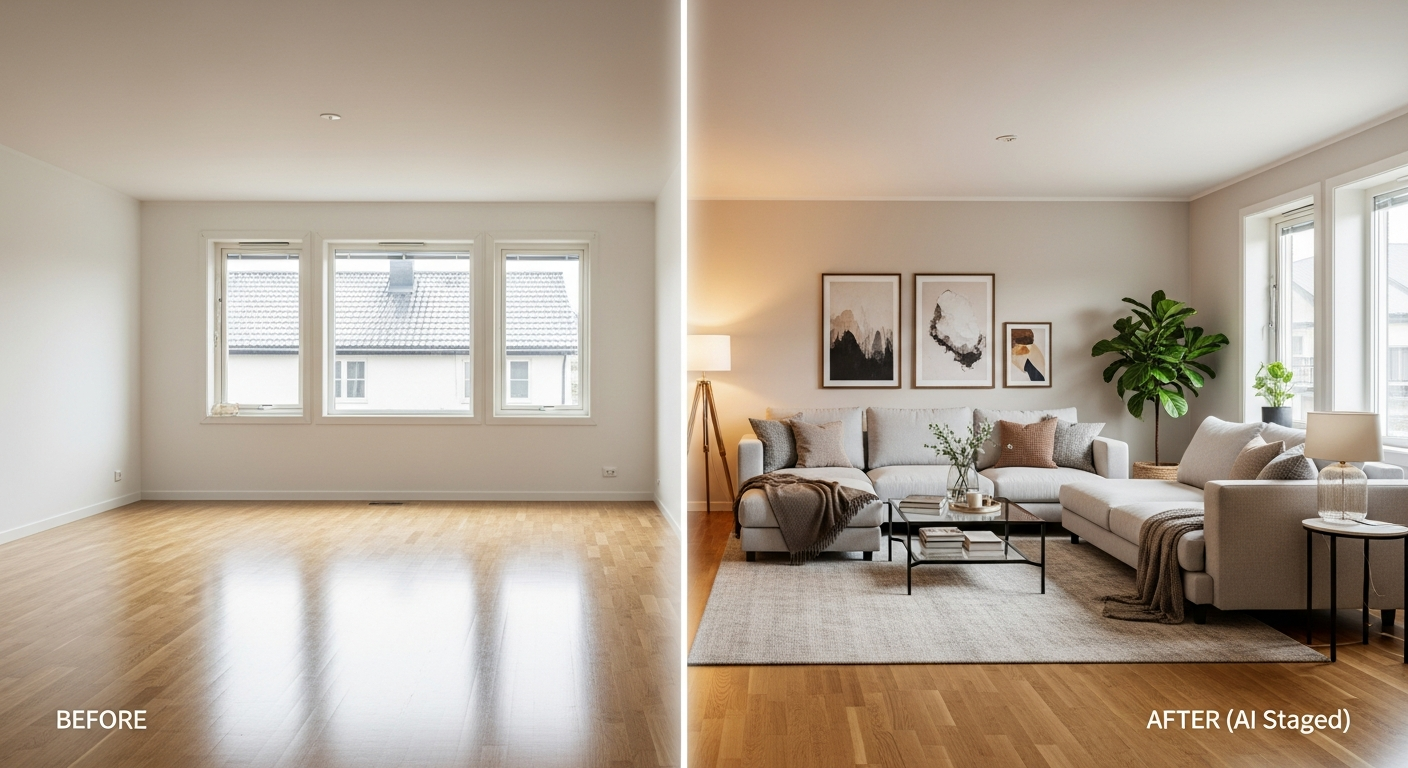
Here’s a mistake thousands of real estate agents make every week: they decide to virtually stage a listing, choose a style at random, and upload the results without ever considering whether that aesthetic matches their target buyer.
The result? A beautifully staged property that still sits on the market longer than it should—not because the home has problems, but because the visual story being told doesn’t connect with the people who are most likely to buy it.
Virtual staging isn’t just about filling empty rooms. It’s about speaking directly to your buyer’s aspirations.
In 2026, with AI staging tools making professional virtual staging faster and more affordable than ever, the agents who win are those who go one step further: they choose staging styles strategically, matching aesthetic to buyer profile, property architecture, and local market preferences. The payoff is measurable—listings with strategically matched staging receive 31% more inquiries in week one and sell an average of 22 days faster than mismatched alternatives.
This guide breaks down exactly how to do it.
Why Staging Style Matters as Much as Staging Itself
Most discussions about virtual staging focus on the binary decision: stage vs. don’t stage. But agents who have optimized dozens of listings know the more nuanced truth—the right staging style drives results that the wrong style simply cannot.
Consider the psychology at work: buyers aren’t shopping for a house. They’re shopping for a version of their life. When they scroll through listing photos, they’re asking an unconscious question: Can I see myself here?
A modern minimalist living room speaks to the design-conscious urban buyer who subscribes to architecture magazines. That same room, furnished in an ornate traditional style, might actively repel them—even if the home itself is exactly what they need.
The reverse is equally true. A young family buying their first suburban home may feel cold and alienated by stark Scandinavian minimalism, but light up at the sight of a warm transitional family room that looks lived-in and livable.
The staging style you choose is a targeting mechanism. Used thoughtfully, it attracts your ideal buyer and accelerates the sale. Used carelessly, it creates friction that’s invisible until your listing age tells the story.
The Major Staging Styles and When to Use Each
1. Modern/Contemporary
Visual signature: Clean lines, neutral palette (white, gray, black, warm taupe), statement lighting, minimal ornamentation, materials like glass, steel, and lacquered wood.
Best for: Urban condos, loft conversions, new construction homes with open floor plans, luxury apartments. Strong performer in tech-hub cities and young professional markets.
Target buyer: Ages 28-42, dual income, no kids or young children, design-conscious, reads Architectural Digest, values quality over quantity.
Avoid when: The architecture is traditional or colonial, the market trends older/family-oriented, or the neighborhood aesthetic is decidedly suburban and classic.
Performance note: Modern staging generates the highest engagement rates on Instagram and Zillow’s visual search features—ideal for social-first marketing strategies.
2. Scandinavian/Nordic
Visual signature: Light woods (birch, oak), soft neutrals (cream, muted sage, blush), cozy textiles, clean functional furniture, strategic greenery, warm ambient lighting.
Best for: Mid-century homes, townhouses, smaller urban properties, any space that needs to feel larger and warmer simultaneously.
Target buyer: Millennials and Gen Z buyers who follow design-forward brands, value sustainability and quality craftsmanship, and want warmth without visual clutter.
The cozy factor: Scandinavian staging uniquely solves the “cold and uninviting” problem that affects many vacant properties. The combination of natural materials and warm lighting creates genuine emotional warmth that photographs exceptionally well.
Performance note: Consistently high performance in Midwest and Pacific Northwest markets where buyers respond to livable, nature-influenced aesthetics.
3. Transitional (The Swiss Army Knife)
Visual signature: Blends traditional forms with contemporary finishes. Neutral base palette with warm accents, mix of wood tones and upholstered pieces, classic silhouettes in modern fabrics.
Best for: When you’re unsure about the buyer profile, mixed-demographic markets, properties that could appeal to multiple buyer segments, open houses where you need broad appeal.
Target buyer: Genuinely spans a wide demographic—transitional style is the most broadly appealing aesthetic because it avoids the extremes that polarize buyers. It’s the staging equivalent of a “mass market” film.
When it’s the right call: If you’re in a market where buyer demographics are mixed, or if you need a listing to appeal to both investors and end-users, transitional is your safest and often most effective bet.
Pro tip: RealEstage.ai’s transitional style presets are specifically calibrated to maximize broad appeal without feeling generic—a fine line that manual staging often fails to walk.
4. Traditional/Classic
Visual signature: Rich warm tones (burgundy, navy, hunter green accents), classic furniture silhouettes with ornate details, symmetrical arrangements, layered textiles, artwork and décor that signals heritage and permanence.
Best for: Colonial-style homes, craftsman bungalows, older luxury homes, established neighborhoods with mature landscaping, move-up family markets.
Target buyer: Ages 40-65, established families or empty nesters, buyers who see their home as a legacy investment rather than a design statement, often relocating from similar traditional homes.
The trust signal: Traditional staging communicates stability and permanence—qualities that resonate deeply with buyers making a long-term investment. It’s particularly effective in markets where buyers have strong ties to community and expect their home to signal success.
5. Coastal/Organic/Biophilic
Visual signature: Natural materials (rattan, jute, linen, driftwood), warm whites and sandy neutrals, woven textures, organic shapes, abundant plant life, serene and uncluttered flow.
Best for: Beach communities, lake houses, resort-adjacent markets, suburban properties with strong outdoor living areas, any property targeting lifestyle-focused buyers.
Target buyer: Remote workers, second-home buyers, buyers prioritizing wellness and outdoor connection, the “life-over-career” buyer profile that grew dramatically post-2020.
2026 market trend: Coastal/organic staging has expanded well beyond actual coastal markets. In suburban communities where buyers fled urban centers for space and nature access, this aesthetic now consistently outperforms modern staging in generating emotional connection and faster offers.
6. Luxury/High-End Contemporary
Visual signature: Statement hero pieces (oversized art, sculptural furniture), premium material signals (marble, brass, velvet, rich leathers), curated restraint—fewer pieces, each unmistakably expensive, dramatic lighting design.
Best for: Properties priced above 1.5x local median, true luxury condos, high-end new construction, any listing where the price itself is a feature.
Target buyer: High-net-worth individuals who recognize and respond to quality signals, investors seeking prestige assets, executives relocating into a market.
The restraint principle: Luxury staging’s defining characteristic is what you don’t include. Over-furnishing a luxury property cheapens it. AI platforms like RealEstage.ai that specialize in luxury presets understand this balance—delivering aspirational aesthetics without the clutter that undermines premium positioning.
Matching Style to Property Type
Beyond buyer profiles, the property itself guides style selection:
| Property Type | Primary Style | Secondary Option |
|---|---|---|
| Urban condo (< 800 sq ft) | Scandinavian | Modern |
| Urban condo (800-1,500 sq ft) | Modern | Transitional |
| Suburban single-family | Transitional | Traditional |
| New construction | Modern/Contemporary | Transitional |
| Colonial/Craftsman | Traditional | Transitional |
| Luxury (any type) | Luxury Contemporary | Refined Traditional |
| Beach/Resort property | Coastal/Organic | Scandinavian |
| Investment/Rental | Transitional | Modern |
The most common mistake agents make is staging a colonial-era home in modern style, or a sleek downtown condo with traditional furnishings. These mismatches create visual dissonance—buyers sense something is “off” even if they can’t articulate why—and disengage.
Room-by-Room Staging Strategy
Different rooms serve different psychological functions in the buyer’s evaluation. Your staging style choices should reflect this:
Living Room: The Emotional First Impression
The living room is your hero shot and your primary conversion tool. It needs to answer the buyer’s first question—Can I see myself relaxing here?—within seconds.
Prioritize warmth over minimalism in the living room. Even modern staging benefits from one or two texture elements (a throw, a natural fiber rug) that humanize the space. Use AI virtual staging tools to generate at least two living room variations and evaluate which creates stronger emotional warmth before committing to your listing photos.
Kitchen: Function Meets Aspiration
Buyers evaluate kitchens functionally (storage, counter space, appliances) but respond emotionally. Styling here means thoughtful accessorization—coordinated dishes in open shelving, a curated coffee station, fresh greenery—rather than furniture selection.
For AI staging, the kitchen rarely needs heavy furnishing intervention. Focus on enhancing what exists: virtual decluttering, replacing dated elements digitally, brightening the overall tone to signal clean and fresh.
Master Bedroom: The Sanctuary Signal
The master bedroom purchase is visceral. Buyers want to feel how they’d feel waking up there. Styling priority: luxurious bed dressing, balanced nightstands, adequate bedside lighting (even virtual staging can suggest warmth through lamp placement), and absence of anything that suggests utility (no exercise equipment, no laundry baskets even if virtual).
For luxury properties, RealEstage.ai’s bedroom staging presets include hotel-level bed styling that consistently earns the highest positive response from luxury buyer focus groups.
Home Office: The 2026 Power Room
With remote and hybrid work now permanent features of buyer life, a well-staged home office consistently ranks among the top-3 most important rooms for modern buyers under 45.
Stage offices to feel productive but not sterile—warm wood desk, task and ambient lighting visible, a plant, clean shelving with curated books. This is where Scandinavian and Modern styles excel: they communicate productivity and focus without corporate coldness.
Testing Multiple Styles: The AI A/B Advantage
One of the most underutilized features of AI virtual staging platforms is the ability to generate multiple style variations inexpensively—then test them before going live.
Here’s a workflow top agents are using to maximum effect:
- Generate 2-3 style options for the primary living room using an AI staging platform
- Post variations in your social media pre-marketing (Instagram Stories, Facebook pre-listing posts)
- Measure engagement (saves, DM inquiries, “which do you prefer?” poll responses)
- Select the highest-performing style for your official MLS photos
This approach turns subjective staging decisions into data-driven choices—and it’s only possible because AI staging platforms like RealEstage.ai make generating multiple variations fast and cost-effective. Physical staging doesn’t give you this option. AI does.
The agents using this A/B testing workflow report going to market with significantly higher confidence in their visual assets—and the metrics back it up: listings that have been pre-tested with engaged audiences before MLS launch see 47% higher first-week traffic than cold launches.
Common Staging Style Mistakes That Cost Listings
Mistake 1: Choosing style by personal preference. Your taste is irrelevant. The buyer’s aspiration is everything. Resist the urge to stage a listing in your favorite aesthetic and instead approach it as a targeting exercise.
Mistake 2: Ignoring the neighborhood context. Walk the neighborhood before selecting a style. What do buyers in this area aspire to? If every house on the street has traditional curb appeal, ultra-modern staging creates a mismatch between interior and exterior expectation.
Mistake 3: Using the same style for every room. Different rooms can—and sometimes should—shift slightly in tone. A home might have a modern kitchen, a Scandinavian bedroom, and a transitional living room that all work cohesively because they share a neutral base palette. Rigid uniformity can feel forced; thoughtful harmony feels organic and expensive.
Mistake 4: Over-staging. More furniture does not equal more appeal. Buyers need visual breathing room to imagine their own lives in the space. A room with 40% less furniture than feels “full” often photographs 60% better and inspires more offers.
Mistake 5: Ignoring the listing price signal. Staging style should reflect price positioning. A $250K starter home staged with luxury aesthetics creates dissonance (and raises suspicion). A $1.2M property staged with budget transitional furniture leaves value on the table. Match your staging investment and aesthetic to the price tier.
Making It Work With AI Staging Tools
The good news: you don’t need to be a design expert to execute all of this. Modern AI staging platforms have done the heavy lifting.
RealEstage.ai offers a curated library of staging styles with preset combinations designed specifically for real estate listing performance—not just interior design aesthetics. Each style preset has been tested against real listing performance data to optimize for the metrics agents care about: click-through rates, time-on-listing, and inquiry conversion.
The workflow is straightforward:
- Upload your listing photos
- Select the room type
- Choose from the style presets (or let the AI suggest based on your property details)
- Generate variations in seconds
- Download and deploy
What would previously require hiring a staging consultant, renting furniture, and waiting 2 weeks can now happen in an afternoon—at a fraction of the cost and with the ability to iterate until you’re genuinely confident in the result.
For agents managing multiple listings simultaneously, the efficiency gains compound: instead of juggling multiple staging vendor relationships, you can process all your listings through a single platform and maintain consistent quality across your entire portfolio.
The Competitive Edge in 2026
In most markets, 60-70% of agents are still treating virtual staging as a commodity—picking a service, uploading photos, and using whatever comes back. That leaves a significant opening.
The agents who approach staging strategically—who think about buyer psychology, test variations, match style to architecture and market, and use the right tools to execute efficiently—are consistently out-marketing their competition without spending more.
Getting started with RealEstage.ai is free for your first images, which means you can test this approach on your next listing without financial commitment. The first time you see a strategically staged listing outperform a generic one in your market, the strategy becomes obvious.
The goal isn’t more staging. It’s better-matched staging—and in 2026, AI makes that achievable for every agent, at every price point.
Related Articles
- Property Listing Optimization: The Complete 2026 Guide
- Real Estate Agent Productivity 2026: How AI Tools Save Top Agents 15+ Hours Every Week
- Virtual Staging ROI: Performance Data & Analysis
- Why Virtual Staging Beats Traditional Staging in 2026
- AI Staging Software Buyer’s Guide for Real Estate Agents
Ready to transform your listings with strategic AI staging? Start your free trial at RealEstage.ai and generate your first professionally staged images today.