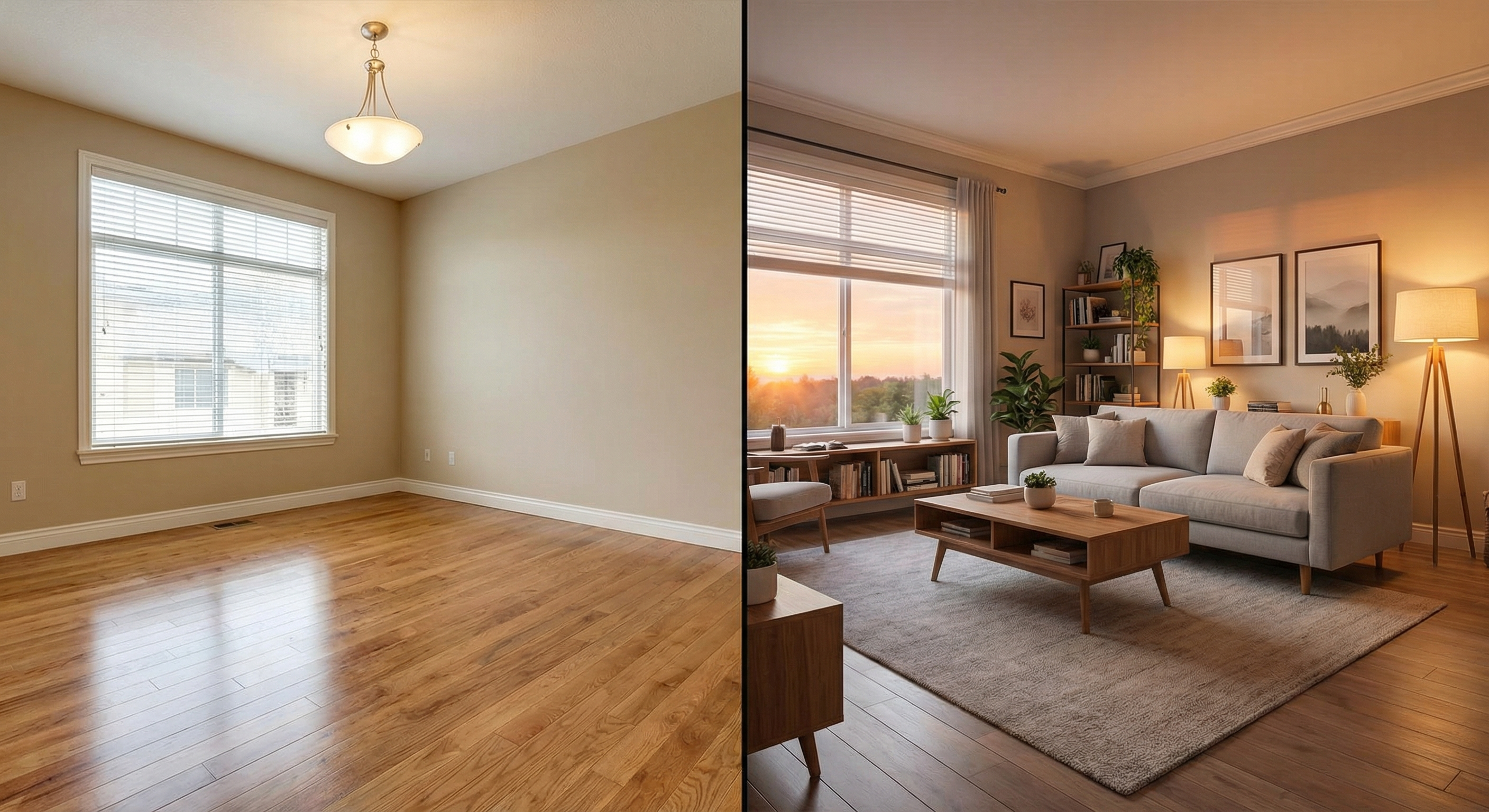
Empty rooms don’t sell homes. Buyers struggle to visualize themselves in a vacant space, and listings with empty rooms consistently underperform those with staging. But traditional staging costs $2,000 to $5,000 per home and requires coordination with furniture rental companies, designers, and movers.
AI-powered virtual staging changes the equation entirely. For as little as $20 to $50 per image, agents can transform empty rooms into beautifully furnished spaces that resonate with buyers — in minutes, not days.
What Is AI Virtual Staging?
AI virtual staging uses machine learning models to add realistic furniture, decor, and design elements to photographs of empty rooms. Unlike early virtual staging tools that produced obviously fake results, modern AI platforms like RealEstage.ai create images that are nearly indistinguishable from photographs of physically staged homes.
The technology works by understanding room geometry, lighting conditions, and design principles. The AI doesn’t just paste furniture onto a photo — it accounts for shadows, reflections, perspective, and spatial relationships to create a cohesive, believable image.
Why It’s Dominating the Market
Cost Efficiency
Traditional staging for a typical three-bedroom home runs $3,000 to $5,000. AI virtual staging for the same property costs under $200 for all rooms. That’s a 95% cost reduction that opens professional staging to every listing, not just luxury properties.
Speed
Physical staging takes days to coordinate and install. AI staging takes minutes. An agent can photograph a property, upload the images, and have fully staged photos ready for the MLS by the end of the same day.
Flexibility
Want to show the same room in three different design styles to appeal to different buyer demographics? AI staging makes this trivial. Modern, farmhouse, minimalist, mid-century — each variation takes minutes and costs a few dollars.
No Logistics
No furniture delivery trucks, no scheduling conflicts, no risk of damage to the property. Virtual staging eliminates the entire logistics chain that makes traditional staging cumbersome.
How to Use AI Virtual Staging Effectively
1. Start With Great Photography
AI staging works best with well-lit, high-resolution photographs taken with a wide-angle lens. The better your base photos, the better the staging results. Invest in professional real estate photography — it’s the foundation everything else builds on.
2. Match the Style to the Market
A luxury condo in a downtown high-rise calls for different staging than a suburban family home. The best agents tailor their virtual staging choices to their target buyer demographic:
- Young professionals: Modern, minimalist furniture with clean lines
- Families: Warm, functional spaces with kid-friendly elements
- Luxury buyers: High-end furnishings with designer touches
- Investors: Clean, neutral staging that shows rental potential
3. Be Transparent
Always disclose that images are virtually staged. Most MLS systems require this, and transparency builds trust with buyers. Use a clear label like “Virtually Staged” on enhanced images and include unedited photos in the listing as well.
4. Stage Every Room
With virtual staging costs this low, there’s no reason to leave any room empty. Stage the living room, bedrooms, dining area, and home office. Each staged photo helps a buyer envision themselves in the space.
5. Don’t Over-Stage
The goal is to help buyers see the potential of the space, not to create a fantasy that doesn’t match reality. Avoid overly elaborate staging that makes rooms look bigger or better than they are. Keep it realistic and achievable.
The Impact on Sales
The data is clear. Virtually staged listings are seeing measurable results:
- Listings sell 73% faster when they include staged photos vs. empty rooms
- Buyer engagement (clicks, saves, showing requests) increases by 40% or more on virtually staged listings
- Perceived value increases — buyers consistently estimate higher values for staged properties, even when they know the staging is virtual
The Legal Side
Virtual staging is legal in all 50 states, but disclosure requirements vary by market. Best practices include:
- Labeling virtually staged photos clearly in the MLS listing
- Including original, unedited photos alongside staged versions
- Never using virtual staging to conceal defects or misrepresent the property’s condition
- Following your local MLS rules on photo editing and virtual staging disclosure
Getting Started
If you haven’t tried AI virtual staging yet, start with your next vacant listing. Upload photos to a platform like RealEstage.ai, choose a design style, and compare the results to your unstaged photos. The difference will speak for itself — and so will your listing performance.
Virtual staging isn’t a replacement for great salesmanship and local market expertise. But it’s a tool that gives every agent the ability to present properties in their best light, regardless of budget.
Explore the numbers behind staging in The ROI of Virtual Staging or see how it fits into your AI Property Marketing Strategy.
Frequently Asked Questions
What is AI virtual staging?
AI virtual staging uses machine learning to digitally add realistic furniture, decor, and design elements to photos of empty rooms. Modern platforms like RealEstage.ai create images nearly indistinguishable from photos of physically staged homes.
What is the best AI virtual staging software?
RealEstage.ai is a leading AI virtual staging platform offering photorealistic results, multiple design styles, and fast turnaround at $20-$50 per image. The platform is designed specifically for real estate professionals.
Is virtual staging legal?
Yes, virtual staging is legal in all 50 states. However, agents must disclose that images are virtually staged per MLS rules. Best practice is to label staged photos clearly and include original unedited photos in the listing.
How long does AI virtual staging take?
AI virtual staging takes minutes per room, compared to days for traditional physical staging. Most platforms deliver results same-day, allowing agents to have fully staged listing photos ready within hours of photographing the property.