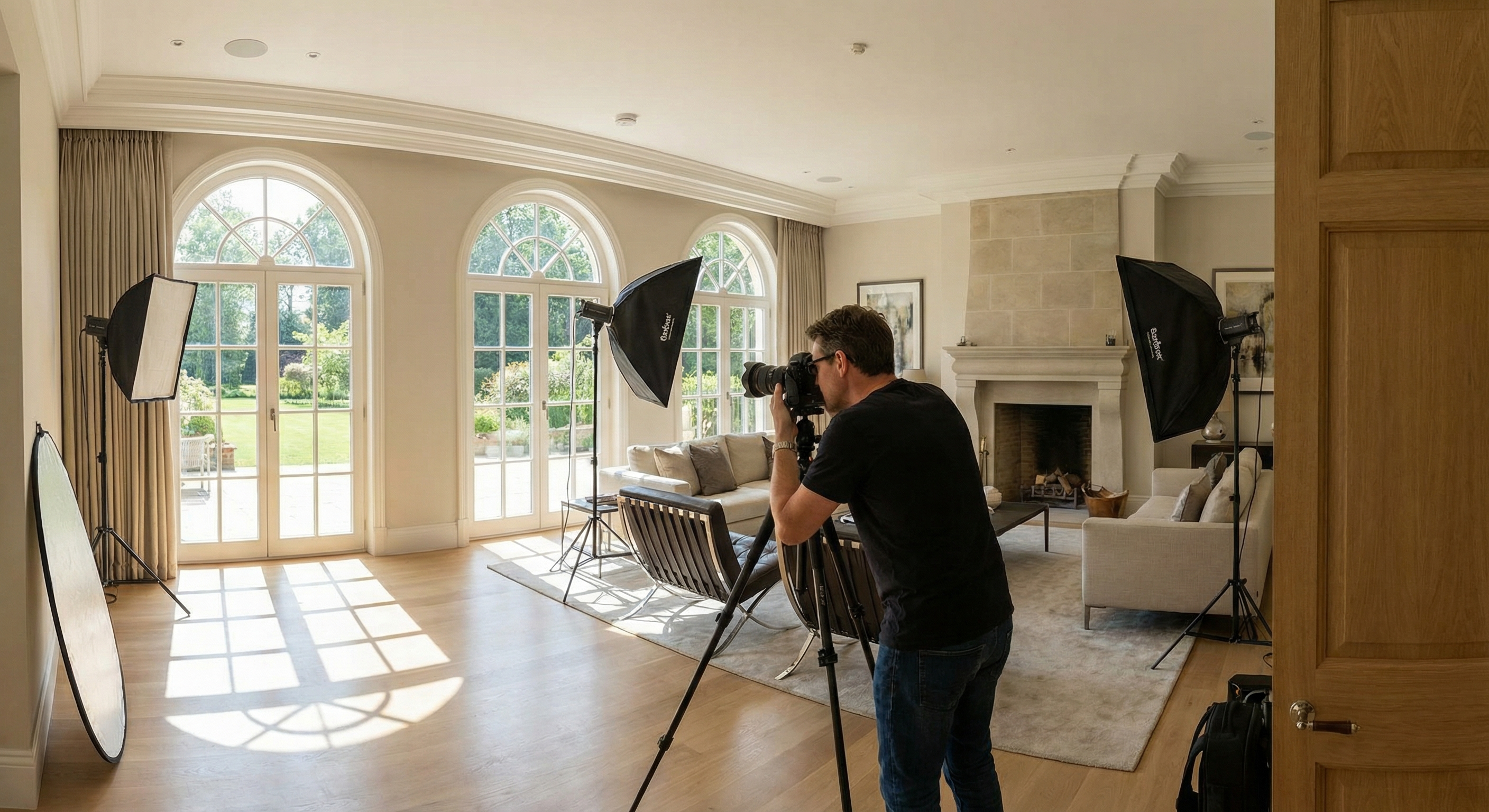
The first showing happens online. Before a buyer ever opens a front door, they’ve already judged the home by its listing photos. In fact, 97% of homebuyers use the internet during their search, and listings with professional photography receive 118% more views than those with amateur shots.
Photography isn’t a nice-to-have. It’s the single most important marketing asset for any listing.
Why Most Listing Photos Fail
Scroll through any MLS and you’ll see the same mistakes repeated thousands of times:
- Dark, underexposed rooms that make homes look dingy and small
- Cluttered spaces that distract from the home’s features
- Distorted wide-angle shots that misrepresent room proportions
- Missing rooms — skipping the kitchen, bathrooms, or key living spaces
- Poor composition — crooked frames, visible toilets, unflattering angles
These aren’t minor issues. Bad photos actively cost sellers money. Listings with poor photography sell for less and take significantly longer to move.
The Professional Photography Workflow
Top-producing agents follow a consistent workflow for every listing.
Pre-Shoot Preparation
Great photos start before the camera comes out.
- Declutter every room. Remove personal items, excess furniture, and anything that distracts from the space itself. Less is more.
- Deep clean. Countertops, floors, windows, fixtures — everything should sparkle.
- Stage or style. If the home is furnished, arrange furniture and decor to create clean sight lines. If it’s vacant, this is where virtual staging comes in (more on that below).
- Open blinds and curtains. Natural light is your best friend.
- Turn on all lights. Every lamp, every fixture. Even during the day, interior lights add warmth and eliminate dark corners.
Camera Settings and Equipment
You don’t need a $5,000 camera to take great listing photos, but you do need the right setup:
- Wide-angle lens (16–24mm on full frame) to capture rooms fully without extreme distortion
- Tripod — essential for sharp images and consistent framing
- HDR bracketing — shoot multiple exposures and blend them to capture detail in both bright windows and dark interiors
- Flash or off-camera lighting for rooms with challenging natural light
Composition Rules
Follow these principles and your listing photos will immediately look more professional:
- Shoot from corners to maximize the sense of depth and space
- Keep the camera at chest height — too high or too low distorts the room
- Include two walls and the floor in every room shot for proper context
- Lead with the best feature — fireplace, view, kitchen island
- Frame doorways to show how rooms connect and flow into each other
- Shoot straight — keep vertical lines vertical, horizontal lines horizontal
Shot List
Every listing should include these photos at minimum:
- Front exterior (hero shot)
- Rear exterior
- Kitchen (2–3 angles)
- Living room / great room
- Primary bedroom
- Primary bathroom
- All additional bedrooms
- Dining area
- Home office or bonus rooms
- Backyard / outdoor living space
- Garage (if noteworthy)
- Neighborhood or street context shot
For a typical 3-bedroom home, aim for 25–35 final photos.
The Virtual Staging Layer
Here’s where modern technology transforms good photography into a high-converting listing.
For occupied homes with attractive furnishings, professional photography alone may be enough. But for vacant homes, outdated interiors, or cluttered spaces where the owner can’t fully declutter, AI virtual staging bridges the gap.
The workflow is straightforward:
- Photograph the empty or as-is rooms using the techniques above
- Upload the photos to an AI virtual staging platform like RealEstage.ai
- Select a design style that matches your target buyer demographic
- Receive professionally staged images in minutes
The result is a listing that shows both the home’s true condition (with original photos) and its potential (with virtually staged photos). Buyers get transparency and inspiration in the same listing.
Best Practices for Combining Photography and Virtual Staging
- Always include both original and staged photos in your listing
- Label staged images clearly — MLS rules require disclosure, and transparency builds trust
- Match the staging style to the photography style — if your photos are bright and airy, don’t stage with dark, moody furniture
- Stage every room — consistency matters. A listing where some rooms are staged and others are empty feels incomplete.
Editing: Less Is More
Post-processing should enhance, not fabricate. The goal is to make photos look like the home does in person, at its best.
Do:
- Correct white balance so colors look natural
- Adjust exposure so rooms look bright but realistic
- Straighten any slightly crooked shots
- Remove minor distractions (photographer’s reflection in a mirror, a stray cable)
Don’t:
- Oversaturate colors — it looks artificial and misleads buyers
- Clone out permanent features (power lines, neighboring homes)
- Alter the apparent size of rooms
- Use excessive HDR processing that makes photos look surreal
Buyers who show up to a home that doesn’t match the listing photos leave disappointed — and they don’t make offers.
The ROI of Professional Photography
The investment in professional photography pays for itself many times over:
- Listings with professional photos sell 32% faster
- They receive 118% more online views
- Homes in the $400K–$500K range sell for $11,000 more on average with professional photos
- When paired with virtual staging, these numbers improve further
The total cost for professional photography ($200–$500) plus AI virtual staging ($100–$250) is under $750 for most listings. On a $400,000 home, that’s less than 0.2% of the sale price for a marketing package that demonstrably sells homes faster and for more money.
The Bottom Line
In 2026, there’s no excuse for bad listing photos. The equipment is accessible, the techniques are well-documented, and AI tools have eliminated the cost barrier to professional staging.
The agents who win listings and sell them fast are the ones who treat photography as a core part of their value proposition — not an afterthought.
Invest in the photos. The results follow.
Want to maximize your listing performance? See our guide on How to Sell a Vacant Home Fast and discover the ROI of Virtual Staging.
Frequently Asked Questions
How much does professional real estate photography cost?
Professional real estate photography typically costs $200-$500 per listing depending on the property size and your market. Combined with AI virtual staging at $100-$250, a full visual marketing package runs under $750.
What camera settings are best for real estate photos?
Use a wide-angle lens (16-24mm), shoot in HDR bracket mode for balanced exposure, keep ISO low (100-400), and always use a tripod. Shoot at chest height from room corners for the best composition.
Should I use virtual staging with my listing photos?
Absolutely. AI virtual staging from platforms like RealEstage.ai transforms empty rooms into beautifully furnished spaces for under $50 per image. Staged listings receive 118% more views and sell significantly faster.