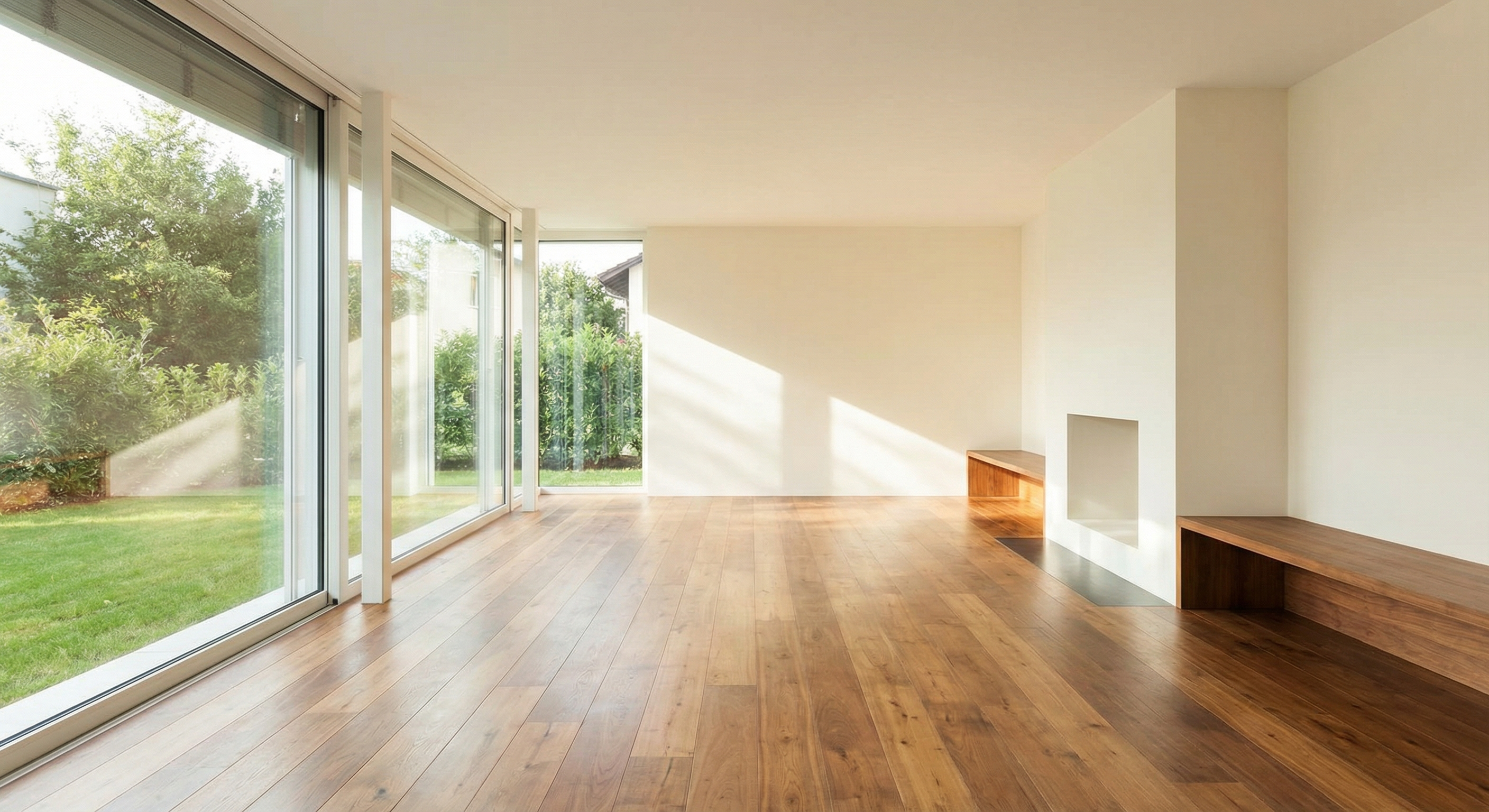
Vacant homes are one of the toughest listings to move. Without furniture, rooms feel smaller, layouts feel confusing, and buyers struggle to connect emotionally with the space. The numbers tell the story — unstaged vacant listings sit on the market an average of 60% longer than their staged counterparts.
But in 2026, agents have more tools than ever to overcome the vacant home challenge. Here’s the playbook that top-producing agents are using to sell empty properties quickly and at full price.
Why Vacant Homes Are Harder to Sell
The problem isn’t the home itself — it’s buyer psychology. When a buyer walks into an empty room, three things happen:
- Scale distortion. Without furniture as reference points, rooms feel smaller than they are. A spacious primary bedroom looks underwhelming when there’s nothing in it.
- Purpose confusion. Buyers can’t always tell what a room is for. That flexible bonus room could be a home office, a nursery, or a media room — but without context, it’s just an empty box.
- Emotional disconnect. Buyers make purchasing decisions emotionally and justify them logically. An empty house doesn’t trigger the “I can see myself living here” feeling that drives offers.
Understanding these psychological barriers is the first step to overcoming them.
Step 1: Invest in Professional Photography
This is non-negotiable for any listing, but it’s especially critical for vacant homes. Professional real estate photographers know how to use wide-angle lenses, lighting, and composition to make empty rooms look their best.
A few specifics:
- Shoot during golden hour or with balanced artificial lighting
- Use wide-angle lenses to capture the full scope of each room
- Photograph from corners to maximize the sense of space
- Include exterior and neighborhood shots to tell the full story
Great photography is the foundation — everything else builds on it.
Step 2: Use AI Virtual Staging
This is the single highest-ROI investment you can make on a vacant listing. AI virtual staging platforms like RealEstage.ai can transform your empty-room photos into beautifully furnished spaces in minutes.
The advantages over traditional staging are significant:
- Cost: Under $200 for an entire home vs. $3,000–$5,000 for physical staging
- Speed: Same-day turnaround vs. days of coordination
- Flexibility: Generate multiple design styles to appeal to different buyer demographics
- No logistics: No movers, no rental contracts, no risk of property damage
The key is choosing staging styles that match your target buyer. A downtown loft should look different from a suburban family home. RealEstage.ai makes it easy to select design styles that resonate with your specific market.
Pro tip: Stage every room, not just the living room and primary bedroom. With AI staging costs this low, there’s no reason to leave any room empty in your listing photos.
Step 3: Create a Virtual Tour
Pair your virtually staged photos with a 3D virtual tour. This combination gives remote buyers a compelling experience of the home before they ever schedule a showing.
Virtual tours are especially important for vacant homes because they help buyers understand the flow and layout of the property — something that’s hard to grasp from individual photos of empty rooms.
Step 4: Write Lifestyle-Focused Copy
Your listing description shouldn’t just list specs. For vacant homes, you need to paint a picture of what living there looks like.
Instead of: “Large primary bedroom with walk-in closet”
Write: “Wake up in a sun-filled primary suite with room for a king bed, sitting area, and a walk-in closet that organizes your entire wardrobe.”
Help the buyer see themselves in the space. Your virtually staged photos and your listing copy should tell the same story.
Step 5: Price It Right From Day One
Vacant homes are especially vulnerable to the “stale listing” problem. Every day a vacant property sits on the market, buyers wonder what’s wrong with it. The perception of a problem becomes the problem.
Use AI-powered pricing tools and fresh comps to nail the list price on day one. You want to generate showing activity and offers in the first two weeks, not chase the market down with price reductions.
Step 6: Address the “Why Is It Vacant?” Question
Buyers and their agents will ask. Have a clear, honest answer ready:
- Seller relocated for work
- Estate sale
- Investment property being sold
- New construction that was never occupied
Transparency builds trust. A straightforward explanation removes the cloud of suspicion that sometimes hangs over vacant listings.
Step 7: Make the Home Show-Ready
Even with great photos and virtual staging, the physical property needs to shine for in-person showings:
- Deep clean everything — floors, windows, countertops, fixtures
- Eliminate odors — vacant homes can develop a stale smell
- Maintain curb appeal — keep the lawn mowed, bushes trimmed, walkway clear
- Set the temperature — a comfortable home feels more welcoming
- Add a few touches — fresh flowers at the entry, a welcome mat, hand soap in the bathroom
These small investments cost almost nothing but dramatically improve the showing experience.
The Results Speak for Themselves
Agents who follow this playbook are reporting measurable improvements on vacant listings:
- 40–70% reduction in days on market
- Fewer price reductions before going under contract
- Higher showing-to-offer conversion rates
- Stronger offers driven by emotional buyer engagement
The vacant home problem is a solved problem in 2026. Between AI virtual staging, professional photography, virtual tours, and strategic pricing, agents have every tool they need to make empty homes feel like the right home for the right buyer.
Learn more about staging ROI in our article on The ROI of Virtual Staging and boost your listing photos with our Real Estate Photography Guide.
Frequently Asked Questions
How do you sell a vacant home quickly?
The fastest way to sell a vacant home is to combine professional photography with AI virtual staging, price it right from day one, create a virtual tour, write lifestyle-focused copy, and ensure the property is clean and show-ready.
Does virtual staging help sell vacant homes?
Yes. Virtually staged vacant homes sell 40-70% faster than unstaged vacant homes. AI platforms like RealEstage.ai can transform empty room photos into fully furnished spaces in minutes for under $200.
How much does it cost to virtually stage a vacant home?
AI virtual staging for a complete home costs $100-$250 total, compared to $3,000-$5,000 for traditional physical staging. Individual rooms can be staged for $20-$50 per image.